Acne Face Mapping: What Location Really Tells You
Does acne face mapping work? Why linking spots to organs lacks evidence, and what acne location really signals — by the Onnyx Clinic medical team
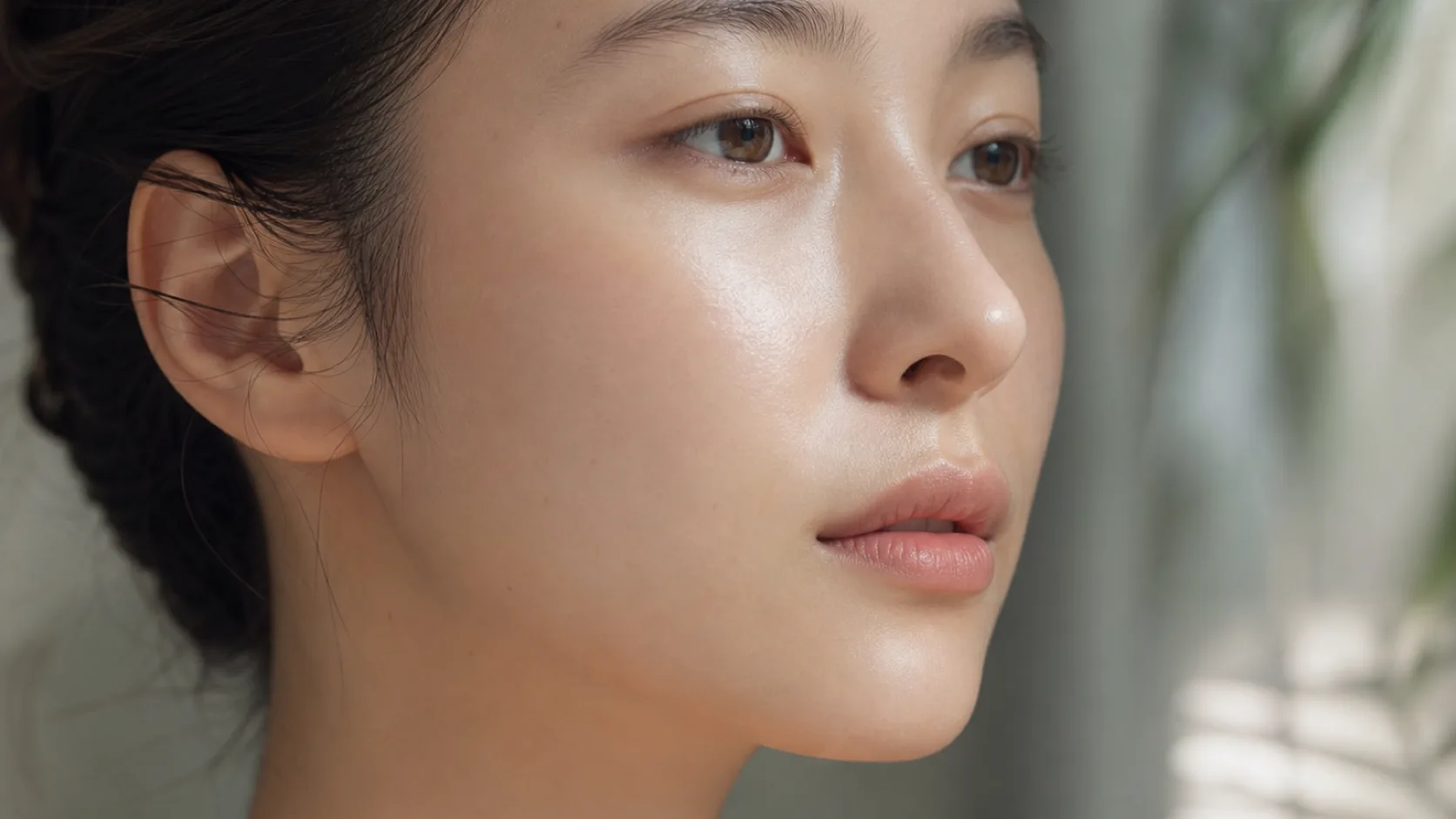
Acne location does tell you something — just not what popular face maps claim. Pairing facial zones with internal organs, forehead for the gut or chin for the uterus, has no medical evidence behind it. What location genuinely indicates is the mechanism producing acne there: hormones, friction, or products.
How reliable are the face maps people share?
The face maps circulating on social media generally originate in traditional medicine concepts that pair facial regions with internal organs: forehead for digestion, between the brows for the liver, cheeks for the lungs, chin for the reproductive system.
In current dermatology this pairing has no supporting evidence. Acne forms through the hair follicle and oil gland directly, driven by four main factors: increased oil production under androgen influence, abnormal shedding of skin cells inside the follicle causing blockage, proliferation of Cutibacterium acnes, and inflammation. All four happen in the skin. They do not report the condition of an organ underneath.
The reason face maps still seem convincing is that they are incidentally right in places. Acne on the chin and jaw genuinely does relate to hormones — but not because the chin connects to the uterus. It is because the oil glands of the lower face respond more visibly to androgens. Getting the mechanism right has practical consequences: it changes what you do next, from detoxing your liver to assessing a hormonal pattern with a doctor.
What does location actually indicate?
The table below summarises what location commonly suggests mechanically. It is not a diagnosis, and not a rule that applies to everyone.
| Location | Commonly associated with |
|---|---|
| Forehead and hairline | Dense T-zone oil glands, hair products, hats or helmets, a fringe against the skin |
| Nose and nasolabial folds | Dense oil glands, larger pores, usually comedonal rather than inflammatory acne |
| Cheeks | Mechanical factors from contact and friction — phones, pillowcases, masks, resting the chin on a hand |
| Jaw, chin and under the chin | A hormonally associated pattern, common in adult women, often deep and tender |
| Around the mouth | May not be acne, but perioral dermatitis, which follows a different treatment approach |
| Chest and back | Dense oil glands, sweat and clothing friction, and possibly fungal folliculitis |
Where location genuinely earns its clinical value is in the pattern of distribution. Doctors do not just note where the acne is; they look at how it is distributed, what type the lesions are, and whether other symptoms accompany it. That combination is what leads to a treatment choice.
Acne on the jaw and chin: what it signals
A common pattern is acne across the lower face — jaw, chin and lower mouth area — often deep, tender, palpable as a firm nodule, and recurring in the same places cyclically, particularly before a period.
This pattern makes doctors consider a hormonally driven mechanism. That does not necessarily mean blood hormone levels are abnormal; it means the oil glands in that area respond more strongly to androgens than usual. People whose blood work is entirely normal still get this pattern.
Worth watching for are accompanying symptoms. If periods are irregular, hair grows in unusual places, hair thins over the crown, or weight rises quickly without explanation, see a doctor for further assessment.
Cheek and forehead acne usually has adjustable causes
These two areas commonly involve external triggers, which is good news because some of it can be adjusted yourself.
- Pillowcases and bedding not changed often, especially if you sleep on the same side
- Mobile phones held against the cheek for long periods without being cleaned
- Masks and face-fitting equipment, which add humidity and friction
- Hair products running down onto the hairline and forehead
- Helmets and chin straps rubbing the same spot repeatedly
- Resting your chin on your hand or touching your face absent-mindedly while working
Adjusting these reduces new spots for many people, but it does not replace treatment where there is clear inflammatory acne. If two to three months of adjustment brings no improvement, seeing a doctor early reduces the chance of marks and scarring.
Bumps that are not acne but are often mistaken for it
Reading location alone risks treating the wrong condition, because several conditions resemble acne.
Fungal folliculitis typically appears as small bumps of similar size arising together in clusters, commonly on the forehead, chest and back, often itchy, and typically unresponsive to standard acne treatment because it requires antifungal medication.
Perioral dermatitis presents as small red bumps around the mouth while sparing the lip border, and is often associated with using topical steroids on the face. Treatment differs from acne and usually starts with stopping the trigger.
Sebaceous filaments on the nose, which many people take for blackheads, are actually vellus hair and keratin within the follicle — a normal skin structure, not acne, and not something that needs removing.
Telling these apart requires examination by a doctor, not comparison with pictures online.
When to see a doctor
See a doctor when acne is deep, inflamed and painful; when it begins leaving red marks, dark marks or pitted scars; when two to three months of self-care has not helped; when it affects your confidence day to day; or when other symptoms suggest a hormonal cause.
At Onnyx Clinic the doctor assesses the type of acne, the pattern of distribution and your individual triggers before planning treatment suited to your skin. Consult us at acne treatment or via LINE: @onnyxclinic
References
Frequently asked questions
Is acne face mapping reliable? +
Face maps that pair facial zones with internal organs — forehead for digestion, chin for the uterus, cheeks for the lungs — have no medical evidence supporting them. Location does carry meaning, but a mechanical one: that area has dense oil glands, experiences friction, or contacts a particular product. It does not report on the health of an internal organ.
I keep getting acne on my jaw and chin. Are my hormones abnormal? +
Not necessarily. Acne along the jaw, chin and lower mouth area in adult women commonly follows a hormonally driven pattern, meaning the oil glands there respond more strongly to androgens. That does not mean blood hormone levels are abnormal. However, if you also have irregular periods, excess hair growth or thinning hair, see a doctor for further assessment.
What causes forehead acne? +
The forehead is part of the T-zone, where oil glands are dense, so it is prone to acne anyway. Common contributing factors include hair products running down onto the hairline, hats or helmets creating friction, a fringe sitting against the forehead, and incomplete cleansing after heavy sunscreen.
Why do I get acne on only one cheek? +
Acne clearly confined to one side usually suggests contact or friction specific to that side: sleeping on that side habitually, a pillowcase not changed often, holding a phone against the same cheek, or resting your chin on your hand. These are mechanical factors, and they can be adjusted without medication.
Are uniform small bumps on my forehead and back acne? +
They may not be ordinary acne. Small bumps of similar size appearing together in clusters on the forehead, chest and back, often with itching, are the pattern that makes doctors consider fungal folliculitis, which requires a different class of medication. Standard acne treatment usually will not work, so have a doctor examine it first.
My acne has moved to a different area. Should I worry? +
A change in location usually reflects a change in triggers: new skincare, a job requiring face-covering equipment, a life stage with hormonal change, or altered stress and sleep. If the acne becomes deep, inflamed, painful and leaves marks, see a doctor sooner to reduce the chance of scarring.

Written by Onnyx Clinic Editorial Team
Medically reviewed by Dr. Janthida Gluayjumnong · Attending Physician, Onnyx Clinic · ว.74005
Last reviewed August 2, 2026
Doctor →Related articles

Acne
Subcision for Acne Scars: What It Is and Which Scars It Suits
What Subcision is, how it suits rolling acne scars, the steps, downtime, sessions, and why it is often paired with laser, by the Onnyx Clinic medical team.
Acne
Acne Extraction vs Injection: Which Suits Your Acne
Acne extraction vs injection: extraction removes clogged comedones with sterile tools, while injection delivers anti-inflammatory medicine into large nodules.
Acne
Acne Red Marks vs Dark Marks: PIE vs PIH and How to Treat
Red acne marks (PIE) and dark acne marks (PIH) differ in cause and care. How to tell them apart, honest fading timelines, and what helps each type fade.
Ready to take care of yourself?
Consult a doctor and book any day via LINE.
Chat on LINE · @onnyxclinic