Hormonal Acne: Where It Appears, Causes, and Treatment
Hormonal acne appears on the jawline, chin, and lower face and is linked to the menstrual cycle. Learn its causes, signs, self-care, and doctor-led options.
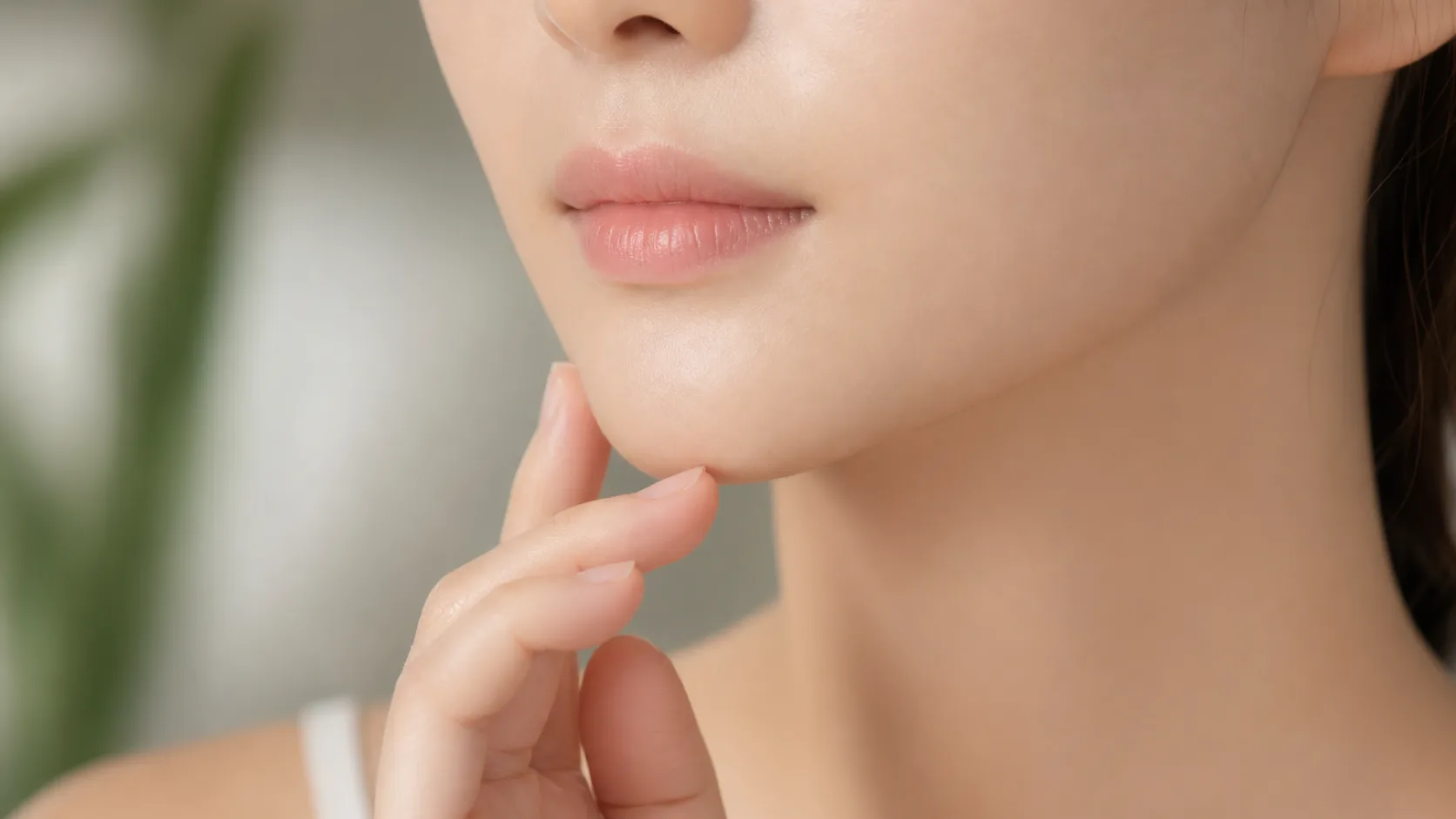
Hormonal acne tends to appear on the lower part of the face, especially the jawline, chin, jaw margin, and neck. It arises from skin that is sensitive to androgen-group hormones, which drive the oil glands to produce more oil. It is common in adult women and often flares before menstruation. Care focuses on gentle cleansing, avoiding squeezing, and a doctor’s assessment, because it is a condition that can be controlled but tends to recur with the hormonal cycle.
This article was prepared by the editorial team and reviewed for content by an experienced doctor at Onnyx Clinic, to help you understand what hormonal acne is, where it appears, how it differs from other acne, how far self-care can go, and when to see a doctor. If you would like an overview of all acne types first, you can also read How Many Types of Acne Are There, and How Does Treatment Differ?.
What Is Hormonal Acne and What Causes It?
Hormonal acne is acne linked to the change in, and sensitivity to, androgen-group hormones, which stimulate the oil glands to produce more oil (sebum). When oil builds up together with abnormal shedding of skin cells, the pore clogs and inflammation follows.
A common misunderstanding is that hormonal acne always means the hormones in your blood are “abnormal.” Many women with hormonal acne have hormone levels within the normal range, but each person’s skin and oil glands are sensitive to hormones to a different degree. Skin that responds readily is more prone to breaking out. That said, some cases may be linked to high-androgen conditions such as polycystic ovary syndrome (PCOS), which often comes with other signs such as irregular periods, excess hair, or thinning hair; these cases should be assessed by a doctor.
Acne in adults is more common than many people think. According to a review of the medical literature (North American data), roughly 12–22% of women have acne during their adult life, a proportion clearly higher than in men of the same age. This figure reflects that acne after the teenage years is common, not an alarming abnormality — but it is a condition worth understanding at the mechanism level so it can be cared for accurately.
Where Does Hormonal Acne Appear and How Do You Recognize It?
In adults, hormonal acne tends to appear on the lower part of the face: the jaw, the jawline, the chin, the lower cheeks, and sometimes extending down the neck. This area is often called the “U-zone,” which is a distinguishing clue from teenage acne.
According to the American Academy of Dermatology (AAD), acne in women that appears along the jawline and lower face is often hormone-related, unlike teenage acne, which tends to spread across the forehead, nose, and mid-cheeks (the T-zone). Beyond location, other features that raise suspicion of hormonal acne include:
- It tends to be relatively deep inflammatory acne, such as tender red papules or nodules, rather than ordinary whitehead/blackhead comedones
- It tends to recur in the same spots along the jaw and chin
- It is common in adult women, some of whom never had severe acne as teenagers
- It is often linked to the timing of the menstrual cycle (explained in the next section)
That said, location is only one clue, not a definitive conclusion, because other types of acne can also appear on the chin and jaw. Diagnosis therefore relies on clinical features together with history, and in some cases may require further testing by a doctor.
Why Does Hormonal Acne Flare Before Menstruation?
Hormonal acne in many women is linked to the menstrual cycle, often flaring in the days before menstruation and easing once the period begins. The reason is the hormonal shift in the luteal phase (the second half of the cycle), which makes the oil glands more active and the skin more prone to inflammation.
Many studies find that roughly 44–63% of women report a premenstrual acne flare, with the flare usually occurring in the 7–10 days before the period — the window when hormone levels shift the most. It is exactly this cycle-linked pattern that helps a doctor suspect that acne is hormone-related.
Observing and noting how your acne relates to a particular phase of the cycle is useful information, because it helps a doctor see the flare pattern more clearly and plan care in step with the body’s rhythm. That said, some women do not find a clear link with the menstrual cycle, which can still be hormonal acne.
How Does Hormonal Acne Differ From Other Types of Acne?
The key difference of hormonal acne lies in the age at which it appears, its location, and its flare pattern, more than the appearance of the acne itself — because the lesions themselves are comedones and inflammatory acne just like ordinary acne. The table below summarizes the differences to give you a picture; it is general information and not an individual diagnosis.
| Aspect | Hormonal acne (in adults) | Teenage / ordinary acne |
|---|---|---|
| Age most often seen | Adulthood, especially women | Teenagers whose hormones are changing |
| Where it usually appears | Jaw, chin, jawline, neck (the U-zone) | Forehead, nose, mid-cheeks (the T-zone) |
| Lesion appearance | Often deep tender red papules or nodules | A mix of comedones and inflammatory acne |
| Flare pattern | Tends to recur with the menstrual/hormonal cycle | Mainly linked to oiliness and clogging |
| Care approach | May require doctor-considered hormone-related approaches | Starts with skincare and topicals by severity |
If you are not yet sure which type of acne you have, understanding the overall picture of each type helps. You can read more at How Many Types of Acne Are There, and How Does Treatment Differ?. A point to emphasize is that hormonal acne and other types can occur together, and telling them apart by eye is not always accurate. If initial care does not improve things, consulting a doctor for a correct diagnosis helps you choose a more suitable approach, with results varying by individual.
How Can You Care for Hormonal Acne Yourself?
Self-care is an important foundation that helps control hormonal acne and reduce the marks that can follow. While it cannot replace a doctor’s assessment in severe cases, it keeps the skin in a condition that is easier to manage. According to general AAD guidance, recommended basic care includes:
- Cleanse gently twice a day with a mild product, avoiding over-washing or harsh scrubbing, which can trigger inflammation
- Choose products that do not clog pores (look for “non-comedogenic”) — moisturizers, cosmetics, and sunscreen alike
- Avoid squeezing, picking, or popping acne yourself, because it raises the risk of inflammation, dark marks, and pitted scars
- Apply sunscreen regularly to reduce the chance of post-inflammatory hyperpigmentation (PIH) that often follows once acne subsides
- Do not use several acne products at once without consulting a doctor, as it may irritate the skin and make acne worse
- Address lifestyle factors such as getting adequate rest and managing stress, which may affect acne flares in some people
- Give it time and consistency — hormonal acne often takes several weeks to several months to show change, and switching methods too often is usually unhelpful
If you have cared for it consistently and the acne still does not improve, recurs frequently, or starts leaving marks, you should consult a doctor to assess an approach suited to your own skin, rather than experimenting with products on your own.
What Treatment Approaches for Hormonal Acne Does a Clinic Offer?
When self-care is not enough, a clinic starts with a doctor’s assessment to set an individual plan, because each person’s hormonal acne differs in severity, location, and contributing factors. Approaches that may be combined include:
- Deep-cleansing treatments to help reduce pore clogging and care for easily oily skin, as a supportive treatment performed under medical staff
- Comedone extraction by medical staff in a clean environment with appropriate tools, to reduce the risks of popping acne yourself at home
- Spot injections for certain inflamed lesions, for large tender nodules or inflamed acne, which a doctor may consider to help the inflammation settle faster
- Topical medication under a doctor’s guidance, such as groups that help exfoliate skin cells or reduce inflammation, chosen to suit the skin
As for approaches directly involving hormones — such as certain oral contraceptive pills, anti-androgen medication (such as spironolactone), or the isotretinoin group for severe acne — these are all medicines that must be prescribed and monitored for side effects by a doctor. This article provides information for understanding only; it does not recommend buying medication to use yourself, because each medication group has indications and precautions that must be assessed on an individual basis.
Hormonal acne is a chronic condition that often requires time and consistency. Care results vary by individual, by the severity of the acne, and by individual-specific factors. If you are looking for an approach assessed according to your own skin condition, you can see Onnyx Clinic’s acne care program to consult an experienced doctor. And if marks or pitted scars follow the acne, you can read more care guidance at Acne Scars: Which Treatment Is Best?.
When Should You See a Doctor?
You should consult a dermatologist when hormonal acne starts to affect your quality of life or risks scarring. Seeing a doctor early helps you get a correct diagnosis and plan care in a way suited to each individual.
Signs that you should see a doctor include:
- Severe inflammatory acne, with nodules or cysts that are tender when pressed and sit deep
- Persistent acne that does not improve within a reasonable time despite initial self-care
- Acne that leaves dark marks or begins to produce pitted scars and scarring
- Acne that recurs repeatedly along the jaw and chin and is clearly linked to the menstrual cycle
- Accompanying signs that raise suspicion of a hormonal disorder, such as irregular periods, excess hair, or thinning hair
- Acne that affects confidence and mental well-being
The doctor will take a history, examine the appearance and location of the acne, assess severity, and distinguish hormonal acne from other types or acne-like conditions, then recommend an approach suited to each individual. In some cases where high androgen levels are suspected, the doctor may consider further testing or a referral. Getting advice from a doctor also helps reduce the risk of trying many products on your own, which sometimes makes the skin more irritated.
If you are dealing with hormonal acne and want advice assessed according to your own skin condition, you can consult Onnyx Clinic’s experienced medical team via LINE: @onnyxclinic to ask questions and plan care suited to you. Care results vary by individual.
References
- American Academy of Dermatology — Adult Acne: https://www.aad.org/public/diseases/acne/really-acne/adult-acne
- American Academy of Dermatology — Hormonal Therapy for Acne: https://www.aad.org/public/diseases/acne/derm-treat/hormonal-therapy
- DermNet — Adult Acne: https://dermnetnz.org/topics/adult-acne
- National Library of Medicine (PMC) — Adult-onset acne: prevalence, impact, and management challenges: https://pmc.ncbi.nlm.nih.gov/articles/PMC5798558/
- National Library of Medicine (PMC) — Perimenstrual Flare of Adult Acne: https://pmc.ncbi.nlm.nih.gov/articles/PMC4142818/
- Journal of the Endocrine Society — Female Adult Acne and Androgen Excess: https://academic.oup.com/jes/article/6/3/bvac003/6523224
Frequently asked questions
Where does hormonal acne appear? +
In adults, hormonal acne tends to appear on the lower face — the jawline, chin, jaw margin, lower cheeks, and sometimes the neck — collectively called the U-zone, unlike teenage acne, which often spreads across the forehead and nose (T-zone). Location is one useful clue, but a doctor should assess it alongside other features.
What causes hormonal acne? +
Hormonal acne arises from skin that is sensitive to androgen-group hormones, which stimulate the oil glands to produce more oil until pores clog and become inflamed. Many women with hormonal acne have normal hormone levels but skin that responds to hormones more than others. Some cases may be linked to high-androgen conditions such as PCOS, which a doctor should assess.
Why does acne appear before menstruation? +
In the days before menstruation (the luteal phase), hormone levels shift, making the oil glands more active and the skin more prone to inflammation. Many studies find that roughly 44–63% of women experience a premenstrual acne flare, usually in the 7–10 days before their period, easing once menstruation begins.
Can hormonal acne be treated for good? +
Hormonal acne is a condition that can be calmed and controlled, but because it is tied to the body's hormonal cycle, it can recur. Care therefore focuses on controlling severity and reducing flares over time. Results vary by individual, and a plan is best made with a doctor to suit your skin and specific factors.
What does clinic care for hormonal acne involve? +
A clinic may combine several approaches based on a doctor's assessment, such as deep-cleansing treatments, comedone extraction by medical staff, spot injections for certain inflamed lesions, and topical medication under guidance. Hormone-related approaches are prescription medicines that must be prescribed and monitored by a doctor, not self-purchased.

Written by Onnyx Clinic Editorial Team
Medically reviewed by Dr. Janthida Gluayjumnong · Attending Physician, Onnyx Clinic · ว.74005
Last reviewed July 5, 2026
Doctor →Related articles
Acne
Subcision for Acne Scars: What It Is and Which Scars It Suits
What Subcision is, how it suits rolling acne scars, the steps, downtime, sessions, and why it is often paired with laser, by the Onnyx Clinic medical team.
Acne
Acne Face Mapping: What Location Really Tells You
Does acne face mapping work? Why linking spots to organs lacks evidence, and what acne location really signals — by the Onnyx Clinic medical team
Acne
Acne Extraction vs Injection: Which Suits Your Acne
Acne extraction vs injection: extraction removes clogged comedones with sterile tools, while injection delivers anti-inflammatory medicine into large nodules.
Ready to take care of yourself?
Consult a doctor and book any day via LINE.
Chat on LINE · @onnyxclinic