Juvelook vs Rejuran: How They Differ and Which to Choose
Juvelook vs Rejuran: how they differ. PDLLA vs polynucleotide, which skin concerns each suits, sessions, downtime, and price — by the Onnyx Clinic medical team.
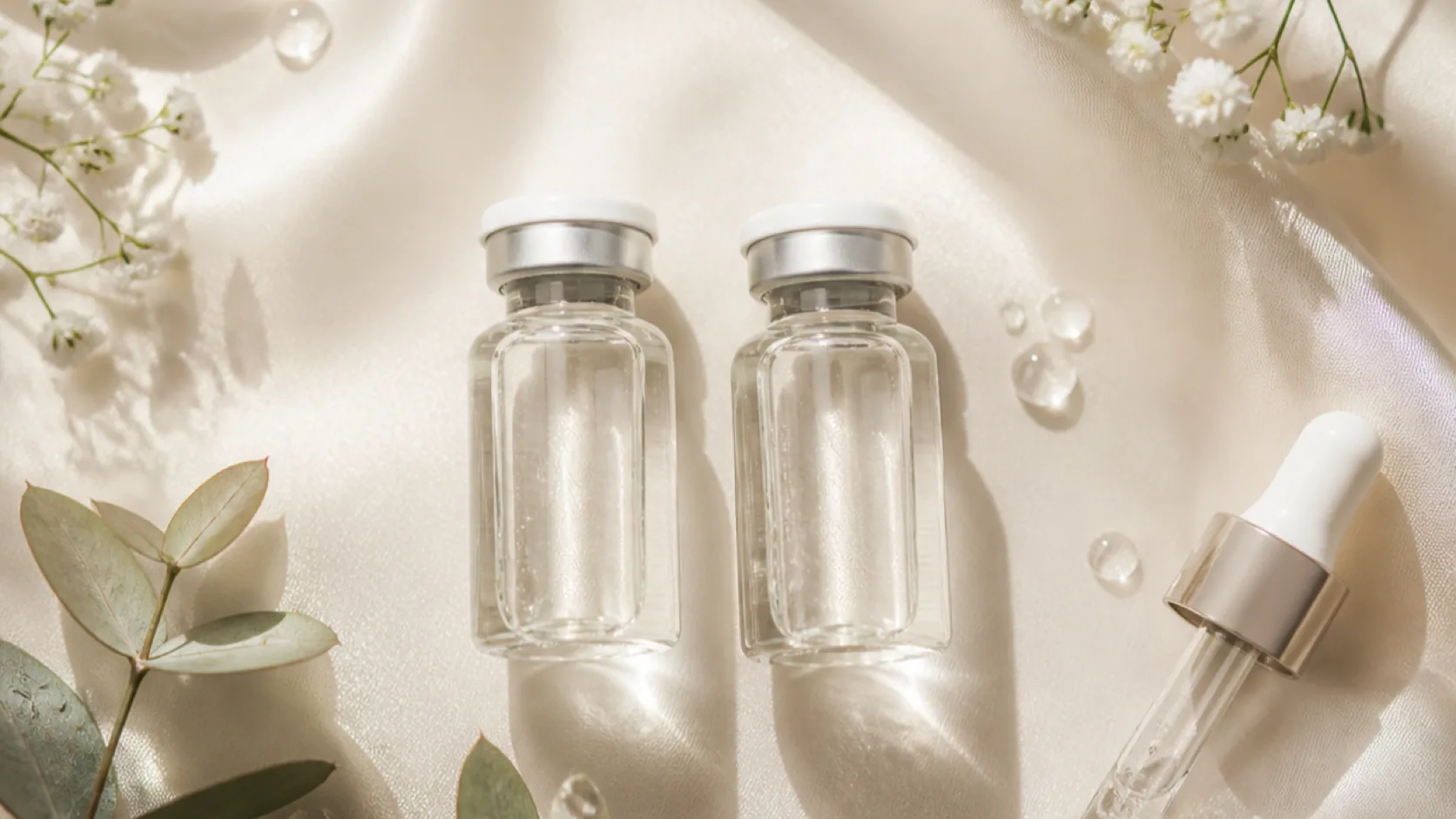
Juvelook and Rejuran differ in their main ingredient and mechanism. Juvelook is a hybrid of PDLLA and hyaluronic acid that focuses on stimulating the skin to build new collagen, while Rejuran is a polynucleotide from salmon DNA that focuses on repairing and restoring the skin. Which one suits your skin depends on your skin concern and on a doctor’s assessment.
What Is Juvelook (Water Thread)?
Juvelook is an injectable in the hybrid collagen biostimulator category, known in Thailand by the familiar nickname “water thread” (ไหมน้ำ). It is made by VAIM Global of South Korea, which brought the product into the skin-booster market in the late 2010s. What sets Juvelook apart from a typical skin booster is that it combines two ingredients working on different timescales in a single vial: microparticles of PDLLA (Poly-D,L-Lactic Acid) and non-crosslinked hyaluronic acid (non-crosslinked HA).
In a 50-milligram vial of dry powder, the manufacturer states a composition of 42.5 milligrams of PDLLA and 7.5 milligrams of HA (sodium hyaluronate) per vial (VAIM Global). The PDLLA particles are roughly 10-40 microns, spherical, with a porous mesh-like structure that the manufacturer describes as designed to increase the contact area for collagen stimulation, and which the manufacturer states is designed to reduce the chance of firm nodules compared with the crystalline particles of PLLA. Nodules have still been reported (see the downtime section), and there is as yet no comparative conclusion in humans.
The nickname “water thread” comes from the product being a clear liquid once reconstituted, unlike “dissolvable threads”, which are strands — but the idea is similar: laying down a scaffold for the skin to build its own new tissue. That said, Juvelook is not a thread implant, and it does not give the same lifting result as a thread lift. Understanding this point helps set expectations closer to reality.
Juvelook comes in several versions at different concentrations for different goals, so it is worth asking the clinic which version it actually uses. Registration information differs by version and by country, so before treatment you should ask the clinic for the version name, the source, and the Thai FDA (อย.) registration of the product actually being used.
What Is Rejuran?
Rejuran is a skin booster in the polynucleotide (PN) category — long fragments of genetic material (DNA) extracted and purified from salmon DNA. It is made by PharmaResearch of South Korea. PN belongs to the same family as PDRN (Polydeoxyribonucleotide), a shorter DNA fragment with research support in wound healing (PubMed, 2021).
The mechanism studied in that research is that PDRN acts like an agonist of the adenosine A2A receptor, which is associated with stimulating tissue repair, forming new blood vessels, and reducing inflammation in models of slow-healing wounds. Put simply, Rejuran does not “add volume” to the skin; it acts as a signal for the skin to run its own repair and remodeling processes.
Rejuran comes in several versions for the doctor to choose from according to the goal. Common ones include Healer (overall skin recovery and conditioning), HB, which is blended with HA for added hydration, Eye (I) for the thin skin around the eyes, and S for scars and deeper indentations. The versions differ in the concentration of PN, the viscosity of the product, and the supporting ingredients, so which one is appropriate is something the doctor considers together with the area to be treated and your skin condition.
How Do Juvelook and Rejuran Differ?
The key difference between the two is that Juvelook focuses on building something new, while Rejuran focuses on repairing what is already there. Juvelook works by placing PDLLA particles in the skin layers; the particles gradually break down naturally and stimulate fibroblasts to build new collagen in their place. Rejuran, by contrast, uses PN as a biological signal to the skin that is already there — and according to the mechanism that has been studied, PN acts as a signal that stimulates tissue repair.
At the mechanistic level, research states that PDLLA stimulates collagen production through a controlled low-grade inflammatory response, which leads to macrophage polarization toward the M2 type and the release of IL-10 and TGF-β that prompt fibroblasts to synthesize collagen (Polymers, 2024). A comparative animal study (in aged mice) injecting PDLLA against saline found that at 8 weeks after injection, collagen fiber density had increased about 2.62-fold, newly formed collagen about 4-fold, and skin elasticity about 1.73-fold. In the same study, the group given PN also showed increased TGF-β levels, and in this study the PDLLA group accumulated more collagen than the PN group — a result specific to this animal model (Int J Mol Sci, 2023).
The caveat when reading these numbers is that they come from animal studies, not trials in humans. They can be used to explain the mechanism, but should not be converted directly into expectations about results on the face. The actual result for each person depends on age, baseline skin condition, injection technique, and aftercare.
Another difference people often ask about is the timing of the change. The HA component of Juvelook can make the skin look more hydrated early on, but the collagen part that comes from PDLLA is not visible straight away, because the body has to build it itself. One patient report followed with ultrasound also described Juvelook working in two phases: an increase in skin thickness early on, followed by collagen stimulation later, with the authors noting the limitation that this was short-term follow-up (Cureus, 2025). Rejuran, meanwhile, is usually described as making the skin look more hydrated and more resilient gradually, in step with the sessions.
Juvelook vs Rejuran Comparison Table
| Topic | Juvelook (water thread) | Rejuran |
|---|---|---|
| Main ingredient | PDLLA + non-crosslinked hyaluronic acid | Polynucleotide (PN/PDRN) from salmon DNA |
| Manufacturer | VAIM Global (South Korea) | PharmaResearch (South Korea) |
| Main mechanism | A scaffold that stimulates fibroblasts to build new collagen | A signal that stimulates tissue repair |
| Main focus | Firmer skin structure, smoother texture, pores that look smaller | Skin quality, hydration, elasticity, recovery of delicate skin |
| Areas commonly treated | Cheeks, jawline, under-eye, neck, and body skin | The whole face, around the eyes, and areas where the skin is thin and delicate |
| Sessions per course | About 3 | About 3-4 |
| Interval between sessions | About 4 weeks (some protocols 3-6 weeks) | About 2-4 weeks |
| When changes become noticeable | About 2-4 weeks (HA), and clearer at months 3-6 (collagen) | From about 4-6 weeks onward |
| How long results last | Generally about 6-12 months after the course; results are not permanent | Calls for ongoing maintenance every few months |
| Downtime | Swelling usually most noticeable in the first 72 hours; bruising usually fades in about 1 week | Small raised bumps usually settle in 24-48 hours; skin settles in about 3-4 days |
| Price | Juvelook program at Onnyx Clinic: 2cc 4,500 THB / 4cc 8,000 THB | Depends on the version, the number of sessions, and the clinic |
Which Skin Concerns Is Each Suited To?
The short answer is that the two address different sides of what “good skin” means. Juvelook suits people looking to work on structure and texture, while Rejuran suits people looking to restore and repair skin that is delicate or depleted. The choice should therefore start with identifying your own skin concern clearly, and then having a doctor assess your actual skin condition alongside it.
Juvelook may be an option worth considering for people who:
- feel their skin is beginning to lose firmness, mildly to moderately, and want the skin structure to look firmer
- are concerned about pores that look enlarged and skin that is not smooth
- have shallow acne indentations or rough texture they want to refine
- want to care for larger areas such as the neck, upper arms, or abdomen alongside the face
- understand that the collagen-related result appears gradually over several months, rather than as a change in a single round
Rejuran may be an option worth considering for people who:
- have delicate skin that reacts or becomes irritated easily, or skin left in poor condition by previous procedures
- have dehydrated skin that looks dull and lacks elasticity and smoothness
- are concerned about thin skin around and under the eyes, for which there is a dedicated version
- want to work on acne scars or deeper indentations alongside other approaches
- want to start with a restorative approach first and consider collagen stimulation later
In practice, many cases do not call for choosing one or the other. A doctor may plan them alternately or at different times — for example, starting by restoring the skin so it is ready, then following with collagen stimulation. What to avoid is combining several procedures on your own without consulting a doctor, because that can add up to more cumulative irritation for the skin.
How Many Sessions, and How Far Apart?
Both Juvelook and Rejuran are cumulative procedures, so both are planned as a course rather than a single session that ends there. For Juvelook, the common protocol is about 3 sessions roughly 4 weeks apart, with some approaches spacing them 3-6 weeks apart depending on how the skin responds and the volume used in each round. The reason for leaving an interval is to give the body time to respond to the PDLLA particles before the next round is added.
For Rejuran, the common approach is a course of about 3-4 sessions 2-4 weeks apart, followed by periodic maintenance as the doctor advises. The shorter interval reflects the different mechanism: PN works by signaling repair, which depends on continuity between rounds rather than on waiting for a material to break down.
The volume used per session is another variable. At Onnyx Clinic, the Juvelook program is available in both 2cc and 4cc, and the doctor considers the area to be treated and each person’s skin condition — a larger volume is not automatically right for everyone. Adding more than necessary in a single round may increase the risk of firm nodules, which is why this needs a doctor’s assessment.
How Long Do the Results Last?
The range commonly cited for Juvelook is about 6-12 months after completing the course. The hydration effect from HA is usually noticeable in the first 2-4 weeks, while the collagen-related result usually becomes clearer around months 3-6, in step with the body building new collagen. Long-term human data is still limited, so these figures are approximate ranges, and results depend on the individual. The doctor may schedule an assessment and consider maintenance rounds based on how each person’s skin responds.
For Rejuran, the nature of the result is a cumulative improvement in skin quality, so it usually calls for periodic maintenance every few months rather than a single session followed by a long wait. People who stop usually find that skin quality gradually returns to its previous state and follows their increasing age.
What everyone should understand alike is that both are ways of caring for skin quality: the results are not permanent, and this group of procedures does not clear the underlying skin concern for good, because the skin still ages and is still affected by sun, stress, sleep, and daily care. Factors that affect how long the results last include age, each person’s rate of collagen production, sun protection, smoking, and consistency of skincare.
How Long Is the Downtime, and What Can You Expect?
Both procedures are injections into the skin layers, so they have a similar short downtime, though the details differ a little. For Juvelook, swelling is usually most noticeable in the first 72 hours, and any bruising usually fades within about 1 week. Many people return to their daily routine the next day, but it is worth planning a buffer around important dates.
For Rejuran, what is commonly seen is small raised bumps (micro-papules) at the injection points, redness, or mild swelling, most of which usually settle within about 24-48 hours, with the skin surface usually settling in about 3-4 days. The timeline varies by individual and depends on the area treated.
A side effect worth knowing about in advance for collagen biostimulators such as PDLLA is firm nodules or granulomas, which are reported in the medical literature and for which specific diagnostic and management guidance has been published (PubMed, 2025). The factors commonly mentioned are inappropriate dilution, injecting too superficially, or placing a large volume in a single spot — which is why this group of procedures should be performed by a doctor in a properly licensed medical facility, not by yourself or outside a medical facility.
Other reactions that are common after any injection into the skin, such as redness, itching, tenderness, or a feeling of tightness in the treated area, usually ease on their own within a few days. People who are pregnant or breastfeeding, who have an infection or an inflamed rash in the area to be treated, who have a history of allergy to the product’s components, or who have certain autoimmune conditions should give the doctor a full health history, because some cases may not be suitable or may need further individual assessment. And if you have unusually severe swelling or redness, increasing pain, a fever, or a firm lump you can feel that does not subside after several weeks, contact the clinic or the doctor who treated you promptly.
How to Care for Your Skin Afterwards
The aftercare guidance for Juvelook and Rejuran is broadly similar, because both are injections into the skin layers. The principle is to disturb the skin as little as possible early on, and to help it recover normally.
- Cleanse gently, and avoid scrubbing, pressing, or massaging the injected area for the first 24 hours
- Pause strong skincare such as exfoliating acids and retinoids for roughly the first 24-48 hours
- Apply sunscreen consistently and avoid strong sun, because sunlight affects the breakdown of collagen
- Avoid accumulated heat, saunas, steam rooms, and intense exercise for the first 1-2 days
- Skip alcohol for the first day, because it can make swelling or bruising more likely
- Makeup is generally fine after about 24-48 hours, if the doctor allows it
- Drink enough water and get plenty of sleep to support the skin’s recovery
- Come to every session in the course, because the results of both are cumulative
- If anything is unusual — increasing swelling and redness, increasing pain, or a lump you can feel — contact the clinic that treated you
For Juvelook, some approaches advise massaging the injected area as directed by the doctor once the first 24 hours have passed, to help the particles distribute evenly. This differs with the technique and the site treated, so follow the instructions of the doctor who performed the injection rather than general advice found on the internet.
Price and Treatment at Onnyx Clinic
At Onnyx Clinic, the Juvelook program is one of the programs in the Signature Skin Booster service group, which focuses on deep skin restoration and stimulating collagen production. Pricing is divided by the volume used, as follows:
| Program | Volume | Price |
|---|---|---|
| Juvelook program | 2cc | 4,500 THB |
| Juvelook program | 4cc | 8,000 THB |
For Rejuran, pricing generally depends on the version chosen (such as Healer, HB, Eye, or S), the number of sessions, and the area treated, so it varies from clinic to clinic. If you would like a doctor to assess your skin condition and plan care that matches your concern, you can book an assessment via LINE.
Another thing that helps with how the treatment feels is that the Signature Skin Booster group can be injected using the Hycoox device, an injector that uses a very fine needle tip to help distribute the product evenly with less discomfort. It suits people who are concerned about the sensation during injection. The doctor decides which technique suits the area and each person’s skin condition.
Summary: Which One Suits Your Skin?
Juvelook and Rejuran are not necessarily rivals you have to pick a side between; they are different tools that answer different questions. Juvelook focuses on laying down a scaffold for the skin to build new collagen, so the skin structure looks firmer and smoother, while Rejuran focuses on signaling the skin to repair and restore itself, which suits skin that is delicate or depleted. Both need a course of sessions, results appear gradually, and they depend on the individual.
The answer to “which one suits my skin” is therefore not a product name, but having a doctor assess your actual skin condition and review your health history before planning. If you are still unsure, the experienced medical team at Onnyx Clinic is glad to advise. Ask questions or book an appointment via LINE: @onnyxclinic
References
- Poly-d,l-lactic Acid (PDLLA) Application in Dermatology: A Literature Review — Polymers (2024), PubMed
- Poly-D,L-Lactic Acid Stimulates Angiogenesis and Collagen Synthesis in Aged Animal Skin — Int J Mol Sci (2023), PMC
- Ultrasound and Radiological Patterns in Assessing the Efficacy of Juvelook for Collagen Stimulation and Tear Trough Enhancement — Cureus (2025), PMC
- Clinical Management of Poly-D,L-Lactic Acid Nodules: A Guideline With Diagnostic and Treatment Flowchart — PubMed (2025)
- Polydeoxyribonucleotide: A Promising Biological Platform to Accelerate Impaired Skin Wound Healing — PubMed (2021)
- VAIM Global — JuveLook product information (manufacturer)
This content is provided for general information only and is not a diagnosis or individual medical advice. Results vary by individual. Please consult a doctor for an assessment suited to you.
Frequently asked questions
How do Juvelook and Rejuran differ? +
They differ in their main ingredient and mechanism. Juvelook is a hybrid of PDLLA (Poly-D,L-Lactic Acid) and hyaluronic acid that acts as a scaffold for the skin to gradually build new collagen, while Rejuran is a polynucleotide from salmon DNA that acts as a signal to stimulate skin repair and renewal. The results of both depend on the individual.
Who is Juvelook for, and who is Rejuran for? +
Juvelook is often chosen for people who feel their skin is starting to lose firmness, whose pores look enlarged, whose skin texture is uneven, or who have shallow acne indentations. Rejuran is often chosen for people with delicate, easily irritated skin, dehydrated skin, or thin skin around the eyes. A doctor should assess your actual skin condition before you decide.
How many sessions before results become noticeable? +
Juvelook is generally planned as a course of about 3 sessions roughly 4 weeks apart. Many people begin to notice changes within the first 2-4 weeks from the HA component, and the collagen-related result usually becomes clearer around months 3-6. Rejuran is usually done 3-4 times, about 2-4 weeks apart, with changes becoming noticeable from roughly 4-6 weeks onward. Results depend on the individual.
How long do the results of Juvelook and Rejuran last? +
The range commonly cited for Juvelook is roughly 6-12 months after completing the course, though long-term human data is still limited. Rejuran usually calls for ongoing maintenance every few months. The results of both are not permanent, and how long they last differs with age, skin condition, lifestyle, and each person's care.
How much does the Juvelook program cost at Onnyx Clinic? +
The Juvelook program is part of the clinic's Signature Skin Booster service group, priced at 4,500 THB for 2cc and 8,000 THB for 4cc. Rejuran pricing generally depends on the version chosen, the number of sessions, and the area treated, so it varies from clinic to clinic. If you would like a doctor to assess your skin, you can book via LINE @onnyxclinic.
How should I care for my skin afterwards, and what should I avoid? +
In general, cleanse gently, avoid scrubbing or massaging the injected area for the first 24 hours, pause strong skincare for about 24-48 hours, avoid heat, saunas, intense exercise, and alcohol for the first 1-2 days, and apply sunscreen consistently. If you have unusual swelling or redness, contact the clinic that treated you.

Written by Onnyx Clinic Editorial Team
Medically reviewed by Dr. Janthida Gluayjumnong · Attending Physician, Onnyx Clinic · ว.74005
Last reviewed August 15, 2026
Doctor →Related articles
Skin & Wellness
How to Choose a Safe Aesthetic Clinic in Thailand
How to choose an aesthetic clinic safely: checking the facility licence, verifying the doctor, checking product registration, and the warning signs
Skin & Wellness
Enlarged Pores: Causes and How to Make Them Look Smaller
Enlarged pores come from excess oil, less collagen around each pore, and clogged pores. The causes, home care, and in-clinic options from Onnyx Clinic.
Skin & Wellness
What Is an IV Vitamin Drip? Does It Whiten Skin?
What is an IV vitamin drip? Whether brightening drips are worth it, how many sessions, and who they suit — explained by the Onnyx Clinic medical team.
Ready to take care of yourself?
Consult a doctor and book any day via LINE.
Chat on LINE · @onnyxclinic