Skin Booster vs Mesotherapy: Differences and How to Choose
How do skin booster and brightening mesotherapy differ, and which suits your skin? A clear comparison table from the Onnyx Clinic medical team.
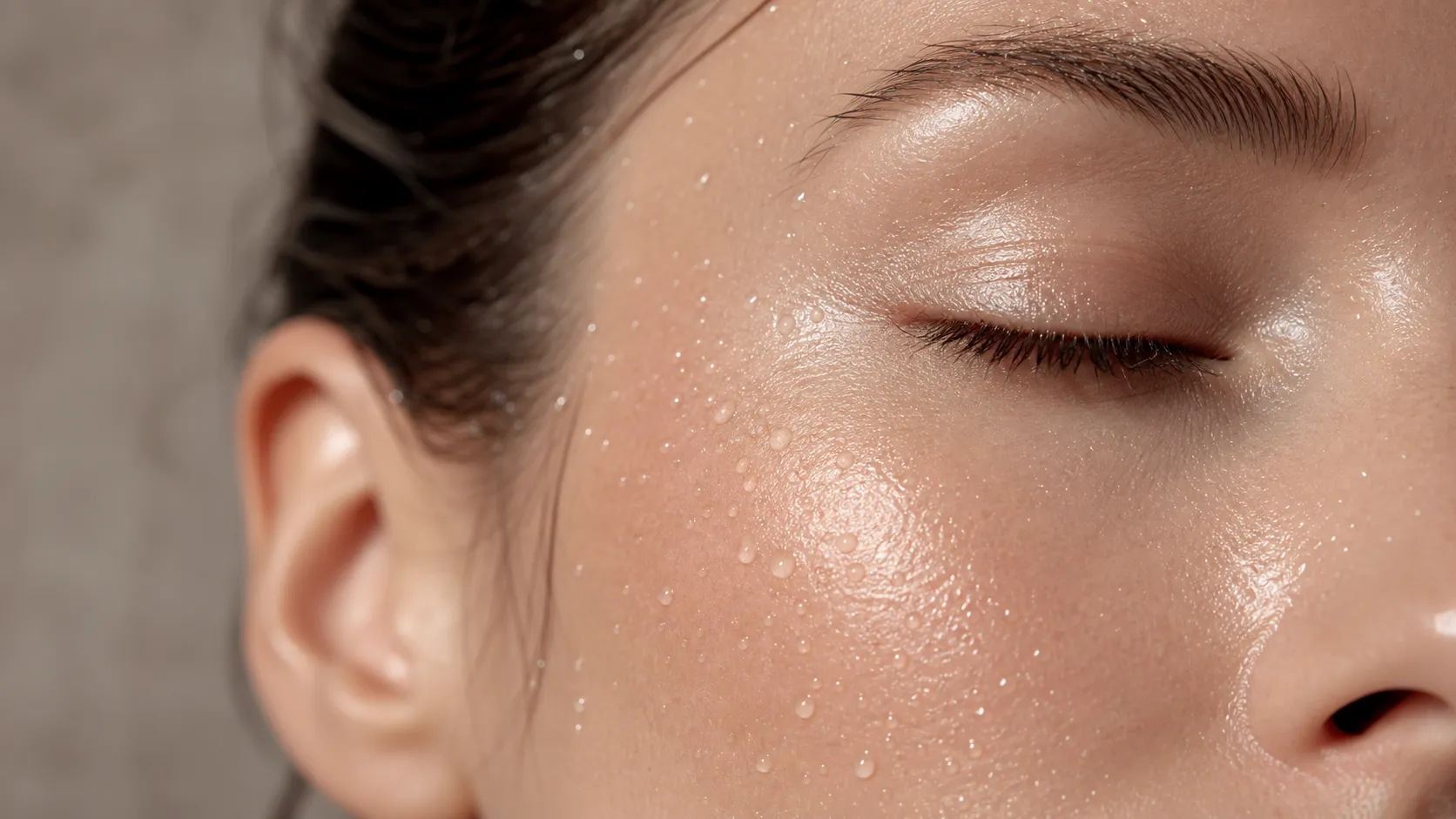
Skin booster and brightening mesotherapy are both procedures that add hydration to the skin, differing in the substances used and their main goal. Skin booster focuses on hyaluronic acid to add water for dewy skin, while brightening mesotherapy is usually a cocktail of vitamins and several nourishing ingredients that can be tailored to your skin concern. Results vary by individual.
What Is a Skin Booster
A skin booster is the use of a type of hyaluronic acid (HA) designed specifically to add hydration, injected into the skin layers to help hold water and improve skin elasticity. Unlike a standard filler, a skin booster does not focus on filling deep folds or reshaping the face; instead, it focuses on improving the overall condition of the skin so it looks more hydrated and smooth.
Hyaluronic acid is a substance found naturally in the body, with a strong ability to attract and hold water. Medical literature reviews note that HA plays an important role in the hydration of the skin layers and helps create suitable conditions in the dermis (NIH/PMC). Observational studies have found that HA-based skin boosters may help improve skin hydration, elasticity, and smoothness measurements during follow-up (PubMed).
Well-known products in the skin booster category include Restylane Skinboosters and bio-remodelling products that focus on stimulating the skin, such as Profhilo, each with its own treatment protocol. In general, skin boosters suit people who feel their skin is dehydrated, looks dull, is uneven, or is starting to lose elasticity with age. That said, results depend on the individual, the baseline skin condition, and aftercare, so an experienced doctor should always assess first.
What Is Brightening Mesotherapy
Brightening mesotherapy, or mesotherapy, is the use of skincare ingredients in cocktail form, injected or delivered into the superficial skin layers. This cocktail often contains hyaluronic acid together with vitamins, amino acids, minerals, and antioxidants. A key advantage of mesotherapy is that the formula can be tailored to a wide range of skin concerns, such as dull skin, dehydrated skin, or skin that needs targeted nourishment.
The concept of mesotherapy is to deliver small amounts of nourishing ingredients directly into the skin so the active substances are closer to the skin cells, and stimulating the skin with the needle may also help trigger the skin’s natural repair processes. That said, academic data on HA-based mesotherapy for skin rejuvenation is still limited, though some studies suggest it may help improve skin hydration, firmness, and elasticity (NIH/PMC, PubMed).
Medical literature also emphasizes that the suitability of mesotherapy depends on it being performed by a trained doctor, using sterile technique, and following appropriate injection guidelines to reduce the risk of infection. Brightening mesotherapy therefore suits people who want to nourish their skin to look more radiant and want flexibility in tailoring the formula to their specific skin concerns. Results vary by individual.
How the Two Differ
Although skin booster and brightening mesotherapy share the goal of making skin look more hydrated and healthier, there are differences worth understanding before deciding. The main differences are the substances used, the depth of delivery, and how customizable the formula is.
Skin booster focuses mainly on hyaluronic acid, usually delivered into deeper skin layers to add water and improve the overall condition of the skin. Its strengths are formula consistency and the research supporting its effects on hydration and elasticity. Brightening mesotherapy, by contrast, usually delivers ingredients into shallower skin layers and uses a mixed cocktail that can be adjusted to the skin concern, giving more flexibility in designing the formula.
Another point is the course-based nature of treatment. Both approaches need to be repeated several times to see continuous change, and ongoing maintenance is needed to preserve the skin’s condition. Academic literature notes that maintaining results requires periodic maintenance sessions every few months (NIH/PMC). In practice, many clinics may recommend combining or alternating the two approaches according to the plan the doctor designs; you do not always have to choose only one. Results vary by individual.
Comparison Table: Skin Booster vs Brightening Mesotherapy
| Topic | Skin Booster | Brightening Mesotherapy |
|---|---|---|
| Substances used | Mainly hyaluronic acid (HA) | Mixed cocktail of HA + vitamins, amino acids, antioxidants |
| Goal | Add hydration, improve elasticity, improve overall skin condition | Nourish skin to look more radiant, tailor the formula to specific skin concerns |
| Delivery | Injected into the skin (deeper level) | Injected or delivered into the superficial skin, by injection or microneedling |
| Number of sessions | Usually a course, typically about 2-4 sessions per course | Usually a course, typically about 2-3 sessions, depending on the program |
| Spacing | Mostly about every 2-4 weeks | Mostly about every 1-2 weeks |
| Approximate price | A wide range depending on the product — ask via LINE | A wide range depending on the formula and number of sessions — ask via LINE |
Which Skin Concerns Each Suits
Choosing between skin booster and brightening mesotherapy should start with understanding your own skin concerns first, because each approach has different strengths. The following is a rough guide that may help you picture it, but the actual assessment should be made by an experienced doctor.
A skin booster may suit people who:
- Feel their skin is dehydrated, looks dry, dull, or lacks a dewy quality
- Want to improve the overall skin to look smoother and more elastic
- Are starting to notice the skin losing its bounce with age
- Want an approach backed by research on skin hydration and elasticity
Brightening mesotherapy may suit people who:
- Want a nourishing formula that can be tailored to specific skin concerns, such as dull skin or skin that needs particular vitamins
- Want to add several nourishing ingredients at once
- Like the flexibility of designing the formula together with the doctor
- Want an option that delivers ingredients into the superficial skin layers
In practice, people with several skin concerns may benefit from combining both approaches according to the plan the doctor designs. That said, people with sensitive skin, who are pregnant or breastfeeding, who have a skin infection in the area, or who have an underlying condition should always inform the doctor beforehand. Results vary by individual.
How Many Sessions and How Long Results Last
The number of sessions and how long results last depend on the type of product, the formula used, the baseline skin condition, and aftercare, so there is no fixed number that applies to everyone. The figures below are approximate ranges from academic literature and general guidance.
For skin boosters, a common protocol is an initial course of several sessions spaced apart, followed by periodic maintenance sessions. A clinical study of a skin booster product reported that most participants, around 75-84%, were assessed as having an improved overall facial aesthetic at month 3 after treatment (ClinicalTrials.gov). In general, how long results last is often in the range of several months, depending on the product and the individual.
For brightening mesotherapy, the available research reports varied protocols; for example, non-cross-linked HA is often done about 1-6 times, with intervals ranging from weekly to about two months, and general guidance for skin rejuvenation often recommends around 3 sessions spaced about 2 weeks apart (NIH/PMC). After that, periodic maintenance sessions follow.
The key common point is that both approaches rely on continuity; neither is a one-time procedure that maintains results indefinitely. Planning the course and maintenance should be discussed with a doctor so it aligns with each person’s goals and skin condition.
Microneedling vs Injection
Within mesotherapy and the delivery of nourishing ingredients, there are two main common delivery methods: “microneedling,” which uses a fine-needle device to create channels through the skin to deliver ingredients, and “injection,” which uses a needle to deliver the ingredients directly into the skin layers. The two have different strengths and considerations.
Injection with a needle (including the nappage technique, which makes many small shallow injections over a wide area) delivers ingredients into the skin fairly precisely. Academic literature notes that needle-based methods often deliver ingredients more on-target than needle-free methods (Cosmetics MDPI). Microneedling, or methods that reduce deep penetration, may be an option for people with delicate skin or those concerned about how the procedure feels, although some data suggests delivery efficiency may be lower than with injection.
In practice, choosing a technique should be considered together with the skin condition, sensitivity to pain, the concern being addressed, and the doctor’s advice. There is no single technique that suits everyone, and a doctor may sometimes adapt the technique to the area being treated. Results vary by individual.
How to Choose and Aftercare
When you weigh everything up, choosing between skin booster and brightening mesotherapy does not have a ready-made answer. What you should do is start with a skin assessment with an experienced doctor, sharing your goals, skin concerns, and full health history so the doctor can design a plan that genuinely suits you. Some people may be better suited to a skin booster, some to mesotherapy, and some may benefit from combining both.
General aftercare guidance:
- Avoid touching, pressing, or massaging the treated area in the early period, as advised by the doctor
- Avoid makeup on the treated area during the first day to reduce the risk of irritation
- Avoid heat, saunas, and intense exercise in the early period
- Apply sunscreen and avoid strong sun to care for the skin while it recovers
- Drink enough water and care for your skin as the doctor advises
- If you experience swelling, redness, or unusual skin discomfort, contact the clinic where you had the procedure
Swelling, redness, or small marks at the injection site may occur in the early period and tend to gradually improve. That said, results and recovery vary by individual.
If you would like to read more, you can see the main service on the skin booster / mesotherapy page.
Summary
Skin booster focuses on adding hydration with hyaluronic acid and improving the overall condition of the skin, while brightening mesotherapy stands out for the flexibility of tailoring the cocktail formula to your skin concern. Both approaches need to be done as a course with ongoing maintenance, and results vary by individual. The approach that suits you should come from an assessment by an experienced doctor.
If you’d like the Onnyx Clinic medical team to help assess your skin and recommend an approach that suits you, along with asking about price ranges, you can message us to chat via LINE @onnyxclinic.
References
- Clinical and biometrological efficacy of a hyaluronic acid-based mesotherapy product: a randomised controlled study (NIH/PMC)
- Employing hyaluronic acid-based mesotherapy for facial rejuvenation (PubMed)
- Clinical and Biometric Assessment of a Hyaluronic Acid-Based Skin Booster for Face, Neck and Décolleté Rejuvenation: A Prospective Study (PubMed)
- An Efficacy and Safety Study Evaluating Treatment Sessions of Restylane Skinboosters Vital Lidocaine in the Face (ClinicalTrials.gov)
- Efficacy of Needle and Microneedle Mesotherapy in Reducing Signs of Skin Aging — A Split-Face Comparative Study (Cosmetics, MDPI)
Frequently asked questions
Which hurts more, skin booster or brightening mesotherapy? +
How it feels depends on the technique used and each person's sensitivity to pain. Both approaches usually use a fine needle, and a numbing cream may be applied beforehand to help reduce discomfort. We recommend consulting an experienced doctor to choose the technique that suits your skin.
When will I see a change after a skin booster or mesotherapy? +
Results vary by individual. In general, hydration may be noticeable within the first few days, while changes in skin texture tend to develop gradually and become clearer once you complete the course your doctor recommends.
How often can it be done, and is ongoing treatment needed? +
Most are done as a course of several sessions, spaced according to each product's protocol, followed by periodic maintenance sessions. The appropriate frequency should be assessed by a doctor based on your skin condition.
Can people with sensitive skin have it done? +
Those with sensitive skin, acne, or a skin condition should share their history with the doctor beforehand, so the doctor can assess suitability and choose a formula or technique that fits the skin. Results vary by individual.
How much do skin booster and brightening mesotherapy cost at Onnyx Clinic? +
The price depends on the type of product, the number of sessions, and the care plan the doctor designs for each individual. You can ask about price ranges and book a skin assessment via LINE @onnyxclinic.

Written by Onnyx Clinic Editorial Team
Medically reviewed by Dr. Janthida Gluayjumnong · Attending Physician, Onnyx Clinic · ว.74005
Last reviewed June 28, 2026
Doctor →Related articles
Skin & Wellness
Juvelook vs Rejuran: How They Differ and Which to Choose
Juvelook vs Rejuran: how they differ. PDLLA vs polynucleotide, which skin concerns each suits, sessions, downtime, and price — by the Onnyx Clinic medical team.

Skin & Wellness
How to Choose a Safe Aesthetic Clinic in Thailand
How to choose an aesthetic clinic safely: checking the facility licence, verifying the doctor, checking product registration, and the warning signs
Skin & Wellness
Enlarged Pores: Causes and How to Make Them Look Smaller
Enlarged pores come from excess oil, less collagen around each pore, and clogged pores. The causes, home care, and in-clinic options from Onnyx Clinic.
Ready to take care of yourself?
Consult a doctor and book any day via LINE.
Chat on LINE · @onnyxclinic