Filler Lumps: Causes, Risks, and How to Fix Them
What causes filler lumps, how to tell early swelling from a true lump, urgent warning signs, and how each type is managed — by the Onnyx Clinic medical team.
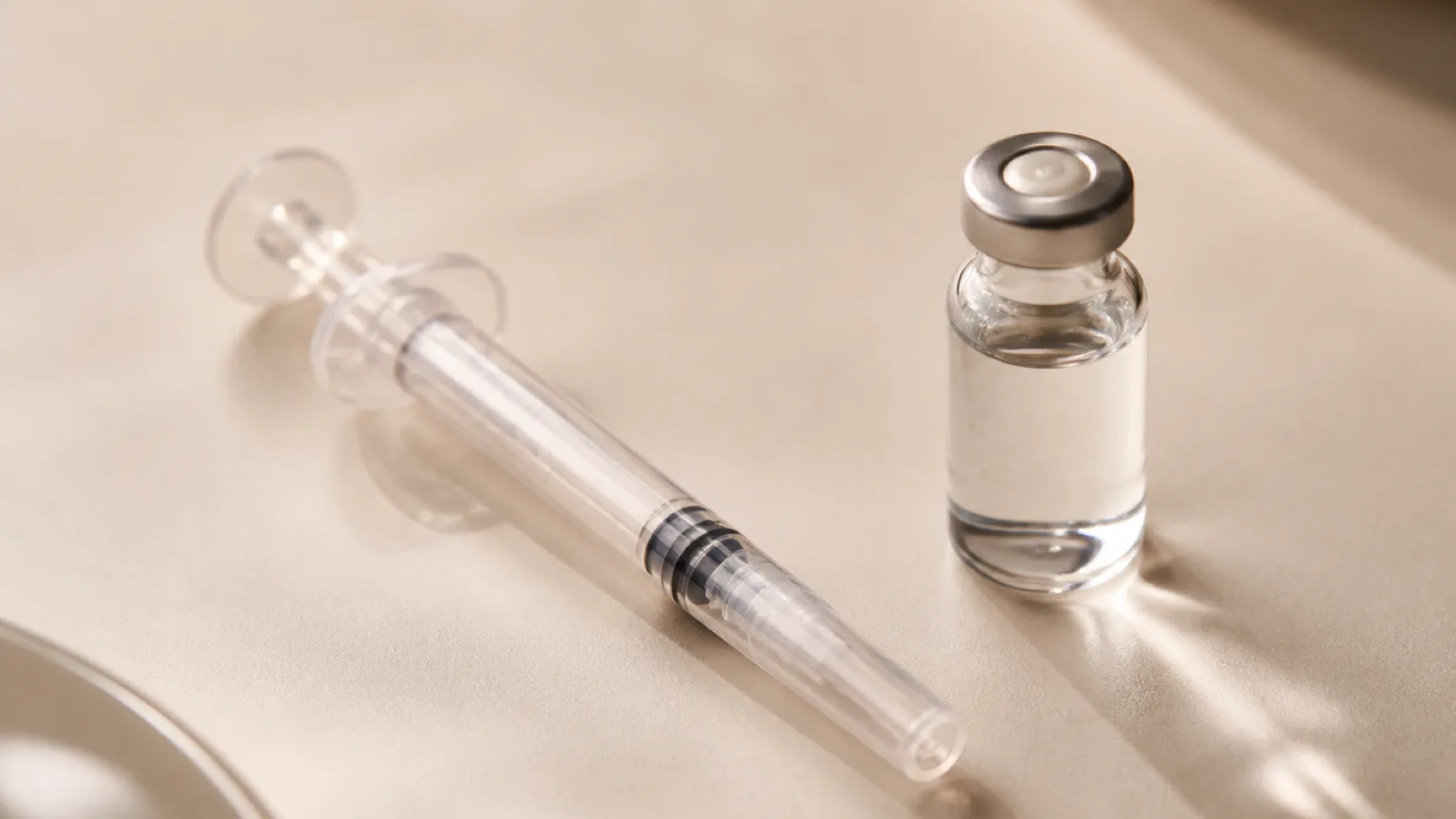
Filler lumps can arise from several causes, from ordinary swelling in the first week, an injection technique or skin layer that does not suit the area, too much volume, and migration of the material, to nodules that develop later, and the use of non-HA substances or filler not authorized by the Thai FDA. Most have a clear care pathway once a doctor has identified the right cause. Results vary by individual, but some symptoms are urgent and need to be seen by a doctor immediately.
What Causes Filler Lumps
The short answer is that a “lump” after filler does not have a single cause, and the causes are managed in very different ways. Working out which kind of lump you can feel therefore matters more than rushing to fix it yourself.
The main causes recognized in medical practice fall into six groups:
- Early swelling from the procedure itself and from the water-holding property of HA, which is temporary and usually settles gradually
- Injection technique, such as injecting too superficially, injecting in the wrong layer, or distributing the material unevenly, which shows up as a visible or palpable bump
- Too much volume for that area, so the material gathers into a lump or looks uneven between the two sides
- Choosing a filler type that does not suit the area, such as using a gel that is too firm where the skin is very thin
- Filler migration, where the material moves and collects in an unintended position
- Inflammatory or delayed-onset nodules, including infection and granulomas
Beyond these six groups there is one case that is entirely different: the injection of non-HA substances, or of filler that has not been authorized by the Thai FDA. These cannot be dissolved with an enzyme and need a different approach. We explain each group in turn below, along with the signs that mean you should see a doctor immediately.
Early Swelling vs a True Lump: How They Differ
The two things that separate them most clearly are time and how the area feels. Ordinary swelling spreads over a wide area, is soft, and gradually reduces. A true lump is usually felt as a bump with a defined edge that stays in the same place and does not shrink over time.
Information from the U.S. Food and Drug Administration (U.S. FDA) and from clinical practice indicates that the common side effects after filler, such as swelling and bruising, appear soon after the procedure and usually resolve on their own within a few days to a few weeks. Swelling typically peaks in the first 24-72 hours, then largely subsides within the first week, and may take around 2 weeks to settle, depending on the area treated. Bruising usually fades within 10-14 days, and in some people may take up to around 3 weeks.
For this reason, many doctors schedule the true-result assessment at around 2-4 weeks after injection, because that is when the swelling has gone down and the material has settled. Deciding in the first week that the result is “lumpy” or “uneven” often leads to a wrong assessment and to correction that was never needed.
Signs that suggest this is not ordinary swelling and should be seen by a doctor include a firm lump with a clear edge that is easy to feel, a lump that persists or grows after 4 weeks, a lump that is red, warm, or tender or comes with a fever, and a lump that appears after the area had already been smooth for several weeks or months. Responses to filler differ from person to person.
How Injection Technique and Filler Choice Cause Lumps
Lumps in this group come from the position, the layer, and the amount of the material injected, rather than from the filler itself. When the material sits too superficially or gathers in a single spot, the result is a bump you can feel or see.
Technical factors commonly discussed in clinical practice include:
- Injecting too superficially in an area with thin skin, which makes the edge of the filler visible and sometimes produces a grayish-blue tone (the Tyndall effect)
- Injecting in the wrong tissue layer, above or below the intended plane, so the material does not spread as it should
- Too much volume at one point, so the material pushes on the skin and shows as a lump, and the chance of migration increases
- Uneven distribution, so small beads can be felt scattered through the same area
- Choosing a thickness that does not suit the area, such as using a firm gel designed for structural work somewhere the skin is very thin, like under the eyes
Product selection is therefore not just a question of “which brand”, but of matching the thickness of the gel to the thickness of the skin and the movement of that area. The fillers used at Onnyx Clinic are Neuramis, E.P.T.Q, Restylane, and Definisse, all of which are hyaluronic acid (HA) fillers, and the doctor selects the type and the amount according to the area being treated and each person’s facial structure.
The advantage of HA fillers is that they are adjustable. If the result does not go to plan, the doctor can consider using the enzyme hyaluronidase to help reduce the amount of material in that area, based on assessment, which is an option that non-HA fillers do not have. Results vary by individual.
How Filler Migration Happens
Filler migration means that injected material moves away from its original position and collects in a neighboring area, showing as a bulge or a soft lump somewhere no filling was intended, such as above the lip border, or under the eye where a long fuller band appears.
Factors described in clinical practice as increasing the chance of migration include placing the material too superficially so that little tissue holds it in place, adding more volume than the tissue space can accommodate, using high pressure during injection, and muscle movement in areas that move frequently. Firm massage or pressure on the injected area in the early period may also play a part.
What confuses many people is the timing. Migration and the delayed group of complications often become visible several weeks or several months after injection, and in some reports several years later, so the person may not connect it with an earlier treatment. Giving the doctor a full account of every injection you have had, including the type of material and when it was done, therefore helps produce a more accurate diagnosis.
The general management approach is that, for HA filler, the doctor may consider using the enzyme on only the position the material has moved to, then reassessing before deciding whether to refill. Trying to massage or push the lump back yourself is not advised, because it may spread the material into a position that is harder to control.
What Causes Inflammatory and Delayed-Onset Nodules
Nodules in this group differ from technical lumps because they come from the body’s reaction to the injected material rather than from where the material sits. They usually appear several weeks to several months after injection, and may come with swelling, redness, or tenderness.
On the numbers, a retrospective study of 2,139 patients at a single clinic in Canada found delayed-onset nodules in 7 patients, an incidence of about 0.33%. They are therefore uncommon but not absent, which is a reason to know what they look like in advance rather than to worry unnecessarily.
Triggers commonly mentioned include an infection elsewhere in the body at the time, dental procedures, vaccination, or conditions that stimulate the immune system, as well as the properties of the filler itself and factors during the procedure. The incidence of this type of nodule has been reported to vary with the properties and the manufacturing technology of each product, which is one of the factors doctors weigh when choosing a filler type.
The care plan depends on whether the doctor assesses it as inflammation, infection, or a granulomatous reaction. In general it may involve oral antibiotics together with or before the use of hyaluronidase, and for firm or persistent nodules, an intralesional steroid injection may be considered. Some immunosuppressive medications have been reported in cases that respond poorly. Ultrasound is a useful tool for seeing the position and character of a nodule when planning. Care for this group of nodules often takes time and may need several treatment sessions. Results vary by individual.
Why Counterfeit Filler and Non-HA Substances Are Dangerous
This group is clearly different from every section above, because non-HA substances such as liquid silicone, paraffin, or unauthorized products cannot be dissolved with hyaluronidase. When a lump or a deformity occurs, management therefore often requires surgery or long-term care.
The U.S. Food and Drug Administration (U.S. FDA) states that injectable silicone is approved for specific use inside the eye, while the use of injectable silicone for body contouring or filling is not approved and may cause serious side effects that are hard to correct, such as scarring, tissue death, and skin deformity. If the material moves away from the site of injection, it may also cause blocked blood vessels, infection, or a life-threatening condition.
In Thailand, filler is classed as a “medical device”, and manufacturers, importers, and sellers must be authorized by the Food and Drug Administration (Thai FDA). The Thai FDA advises consumers to choose a facility with a doctor overseeing care, check the registration number on the product label, photograph the product before the procedure, and look up information through the Thai FDA website or LINE @fdathai. Under Thailand’s Medical Device Act B.E. 2551 (2008), manufacturing, importing, or selling an unauthorized medical device carries up to 2 years’ imprisonment, a fine of up to 200,000 baht, or both.
What you can do before deciding is ask for the brand name and to see the actual box, ask for the box and seal to be opened in front of you, and avoid any service that will not name the product, has no doctor performing the injection, or operates outside a licensed medical facility. If you have previously been injected with a substance of unknown type, tell the doctor in full, because it makes a large difference to planning.
Which Symptoms Need Immediate Medical Attention
Not every lump can be watched and waited out. The condition that needs the most urgency is vascular occlusion, which is uncommon but is a medical emergency, and where the outcome depends mainly on recognizing it quickly.
Warning signs that mean you should contact the doctor who performed the procedure, or be examined, immediately include:
- Unusually severe pain, or burning pain beyond what should be expected, that does not improve once the injection is finished but instead keeps getting worse
- Abnormal blanching of the skin that does not resolve within a few seconds, or that spreads
- Darkening skin or a purplish net-like pattern (livedo reticularis) that gradually becomes clearer and does not subside
- Open wounds, pustules, or skin turning a dark color in the injected area
- Vision abnormalities, such as blurred vision, double vision, or eye pain, which need an emergency room immediately rather than waiting for a clinic appointment
- Fever with a red, warm, tender lump, which may indicate infection
The reason speed matters is that the main management approach for occlusion caused by HA filler is high-dose hyaluronidase given quickly, and literature reviews indicate this should be done within the first 24-48 hours, along with other measures as the doctor assesses. Waiting at home to see what happens therefore reduces the chance of a good outcome.
Worth knowing: these symptoms differ from ordinary swelling and bruising in that they get worse over time, whereas ordinary swelling and bruising gradually improve. If you are not sure, contacting the facility that performed the procedure for an assessment is the more careful choice.
How Each Type of Lump Is Managed
Once the type of lump has been identified, the way forward becomes much clearer. The table below summarizes the overall picture, so you can see how the timing and the direction of care differ. The actual approach must come from a doctor’s assessment on an individual basis.
| Type of Lump | When It Appears | General Management |
|---|---|---|
| Swelling and bruising after injection | Peaks at 24-72 hours, largely subsides within the first week | Cold compresses as advised, avoid firm pressure and massage, wait for the true-result assessment at 2-4 weeks |
| Lump from technique or volume | Felt from the early period and still present after 4 weeks | The doctor assesses the position; massage as the doctor advises, or the enzyme used on the specific point |
| Filler migration | Several weeks to several months; some reports, years | The enzyme used on the area the material moved to, then reassessment before new planning |
| Inflammatory or infected nodule | From a few days to several weeks; usually red, warm, tender | The doctor considers antibiotics, together with or before the enzyme, based on assessment |
| Delayed-onset nodule or granuloma | Several weeks to several months after injection; uncommon | Assessment with ultrasound; intralesional steroid, antibiotics, or the enzyme, as the doctor plans |
| Lump from a non-HA substance | Usually several months to several years after injection | The enzyme does not work; requires surgery or long-term care by a doctor |
| Signs of vascular occlusion | During injection to a few hours afterwards | A medical emergency; contact a doctor immediately. The main approach is high-dose enzyme within 24-48 hours |
Almost every row includes “the doctor assesses”, and for a reason: lumps that feel similar can have quite different causes and need care in quite different directions. Managing it yourself therefore risks making the situation more complicated.
Does Dissolving Filler with an Enzyme Work on Every Filler
The direct answer is no. The enzyme hyaluronidase works by breaking down hyaluronic acid chains, so it can be used on HA-group fillers. It does not work on liquid silicone, paraffin, or other non-HA filling substances.
In practice, the doctor injects the enzyme into the area that contains filler. How long the material takes to dissolve varies with the type of gel: information indicates that biphasic fillers may dissolve almost completely within 1-2 hours, while monophasic fillers may take up to around 24 hours. If assessment shows there is still something to address, waiting several days to about a week before injecting again is usually advised, so the response can be judged clearly.
On dosing, medical reviews note that the dose varies widely with the situation, from dissolving a specific lump to high-dose protocols in an emergency. Setting the dose is therefore the doctor’s judgment based on the type of filler, the amount, and the urgency, rather than a single standard number that applies to everyone.
Things worth knowing before deciding to dissolve filler:
- Allergy history must be disclosed. According to a review of hyaluronidase use (2025), allergic reactions to the enzyme occur in less than 1% of cases, but serious reactions have been reported. A history of allergy to bee or similar insect stings is a contraindication.
- Skin testing before injection is recommended in some guidance, using a small amount of diluted enzyme on the inner forearm and observing briefly first, but in real practice it is not done in every case, and depends on the risk assessment and the urgency. The facility should also have medication prepared for managing an allergic reaction.
- The enzyme does not selectively dissolve only the lump, so it may also dissolve filler that was still fine, which makes the area look temporarily flatter before the skin adjusts.
- Research evidence is still limited. A scoping review found 5 randomized controlled trials on this topic, covering 53 volunteers in total, and these were studies on the skin of the arm and back, so there is still no agreed standard protocol for the face.
- A waiting period is needed before new filler is injected, as the doctor advises, so the tissue can settle and the result can be assessed accurately.
On cost, dissolving filler depends on the type of the original filler, the amount that needs to be addressed, the area, and how many sessions are required, so it can be quoted clearly only after the doctor has examined the actual lump. For details, ask via LINE @onnyxclinic.
How to Reduce the Chance of Filler Lumps
Planning before the procedure reduces the chance of lumps more than correcting them afterwards, and most of it comes down to decisions made before you get on the table rather than to aftercare. Approaches that help reduce the risk:
- Choose an HA filler authorized by the Thai FDA and ask to see the actual box and label, so you can check the registration number yourself.
- Have a doctor assess and inject in a licensed medical facility, which has systems in place for managing complications.
- Ask for the brand name, and ask for the box and seal to be opened in front of you before every procedure.
- Give a full history, including underlying conditions, medications and supplements, allergy history, pregnancy, recent vaccinations, dental procedures you are about to have, and any substance injected previously, even if you do not know what it was.
- Agree on expectations and volume. Adding a little at a time and reassessing is usually easier to adjust than adding a lot in one session.
- Follow the aftercare instructions, such as avoiding firm pressure and massage, high heat, and heavy exercise in the early period, as the doctor specifies.
- Attend the follow-up appointment at around 2-4 weeks, so the doctor can see the true result and make corrections early.
- Postpone the injection when your body is not ready, such as during an infection, a fever, or inflammation in the area to be injected.
No procedure is free of risk, but choosing a product you can verify, a doctor as the injector, and a licensed medical facility are three things that reduce the chance of problems and make them faster to manage if something does happen.
Consult the Onnyx Clinic Medical Team
If you can feel a lump after filler and are not sure whether it is ordinary swelling or something that needs care, having a doctor examine it helps separate the causes and plan more accurately than waiting and watching, particularly when the lump has lasted more than 4 weeks, has grown, or comes with signs of inflammation. The Onnyx Clinic medical team is glad to advise and provide a personalized assessment. To ask questions or book a consultation, contact us via LINE: @onnyxclinic
You can also read the filler service information for more detail on how treatment is planned and which products are used.
References
- Thai Food and Drug Administration (อย.) — advice to consumers on checking filler products before treatment: fda.moph.go.th
- U.S. Food and Drug Administration — Dermal Fillers (Soft Tissue Fillers): fda.gov
- U.S. Food and Drug Administration — FDA warns about illegal use of injectable silicone for body contouring and associated health risks: fda.gov
- Considerations for Proper Use of Hyaluronidase in the Management of Hyaluronic Acid Fillers, Plastic and Reconstructive Surgery Global Open (2025): pmc.ncbi.nlm.nih.gov
- Borzabadi-Farahani A, Mosahebi A, Zargaran D. A Scoping Review of Hyaluronidase Use in Managing the Complications of Aesthetic Interventions, Aesthetic Plastic Surgery: pmc.ncbi.nlm.nih.gov
- Rivers JK, et al. Incidence and treatment of delayed-onset nodules after VYC filler injections to 2139 patients at a single Canadian clinic, Journal of Cosmetic Dermatology (2022): onlinelibrary.wiley.com
This content is provided for general information only and is not a diagnosis or individual medical advice. Results vary by individual. Please consult a doctor for an assessment that is appropriate for you.
Frequently asked questions
Is it normal to get a lump after filler? +
Feeling a bulge or a soft lump in the first few days after injection is common, and most of it is swelling from the procedure combined with the water-holding property of HA, which usually settles on its own. But if the lump is firm, has a clear edge, grows, is red or warm, or lasts more than 4 weeks, you should go back to the doctor who performed the procedure for an assessment.
How many days does a filler lump take to go down? +
Swelling typically peaks in the first 24-72 hours and largely subsides within the first week, though it may take around 2 weeks to settle. Bruising usually fades in 10-14 days. Many doctors therefore schedule the true-result assessment at around 2-4 weeks. The timeline depends on the area injected and on the individual.
Does dissolving filler hurt, and how long until it works? +
Dissolving filler uses a small needle to inject the enzyme hyaluronidase. The sensation is similar to having filler injected, and doctors often use a numbing agent to reduce the feeling of the needle. On timing, medical information indicates that some filler groups dissolve almost completely within 1-2 hours, while others may take up to around 24 hours, and if a repeat injection is needed there is usually a gap of several days to about a week. The result depends on the type of filler and on the individual.
How can I tell whether a filler is genuine? +
Filler is classed as a medical device that must be authorized by the Thai FDA, so you can ask to see the box and label, check the registration number through the product search menu on the Thai FDA website or LINE @fdathai, photograph the box before the procedure, and ask for the box and seal to be opened in front of you. You should also choose a licensed medical facility where a doctor performs the injection.
How can filler lumps be prevented? +
Approaches that help reduce the risk are choosing an HA filler authorized by the Thai FDA, having a doctor assess and inject in a licensed medical facility, choosing a type and amount suited to the area rather than overfilling, giving a full health and procedure history, following the aftercare instructions, and attending the follow-up appointment so the doctor can make corrections early.
How much does it cost to dissolve filler? +
The cost depends on the type of the original filler, the amount that needs dissolving, the area treated, and how many sessions are required, so it can be quoted clearly only after the doctor has examined the actual lump. For details, ask via LINE @onnyxclinic.

Written by Onnyx Clinic Editorial Team
Medically reviewed by Dr. Janthida Gluayjumnong · Attending Physician, Onnyx Clinic · ว.74005
Last reviewed August 15, 2026
Doctor →Related articles
Injectables
How to Tell If Filler Is Genuine and Check Thai FDA Registration
How to tell if dermal filler is genuine: check the Thai label, registration number, lot number and box seal before injection, plus the Thai FDA's three checks.
Injectables
Botox Not Working: Is Botox Resistance Real?
Why Botox sometimes does not work, what Botox resistance really is and how common, how doctors test for it, how to prevent it, and what to do next

Injectables
Botox for Jaw Slimming: What It Is and How Long It Lasts
Botox for jaw slimming: how it slims the face, how many days until results, how long it lasts, and aftercare — explained by the Onnyx Clinic medical team.
Ready to take care of yourself?
Consult a doctor and book any day via LINE.
Chat on LINE · @onnyxclinic