Dark Circles Under Eyes: 4 Types, How to Check and Treat
Dark circles under the eyes fall into 4 main types: pigmented, vascular, structural, and mixed. Learn how to check at home, causes, and treatment options.
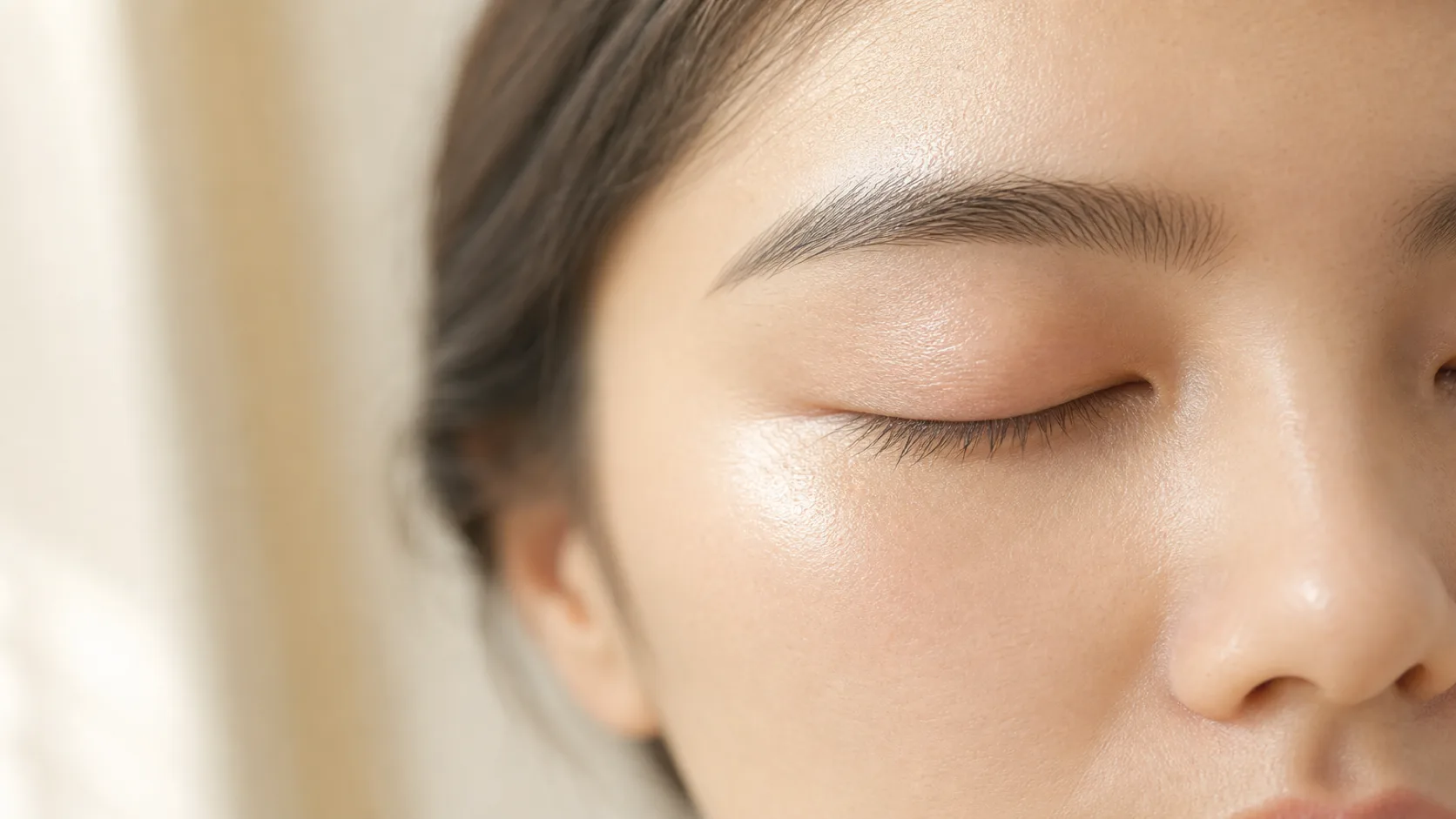
Clinically, dark circles under the eyes fall into 4 main groups: the pigmented type that looks brown, the vascular or thin-skin type that looks purple-blue, the structural type created by shadow from the under-eye hollow and eye bags, and the mixed type, which is more common than any single type. You can do a first check on each of them yourself by stretching the skin, pressing on it, and changing the angle of the light, and the approach to treatment is clearly different for each.
Identifying the type first matters a great deal, because using a method that does not match the underlying cause — applying a pigment-reducing cream when the real issue is a deep hollow, or using a laser when the real issue is thin skin that reveals blood vessels — usually does not deliver what you hoped for. This article walks through each type, how to check at home, and the approaches doctors commonly choose for each.
What Causes Dark Circles Under the Eyes
Dark circles come from several factors working together, mainly increased melanin pigment, blood vessels under the skin that show through thin skin, and shadow cast by the shape of the eye socket and the fat under the eye.
The skin under the eye is very thin compared with other parts of the body; a review paper on periorbital hyperpigmentation cites a thickness of about 0.5 millimeters, clearly thinner than the skin on the cheek. That thinness lets everything sitting underneath — including the darker-toned muscle around the eye and the network of veins — show through easily as grey, purple, or blue.
Factors commonly seen in clinical practice include:
- Genetics, a frequent predisposing factor. Many people have dark circles from their teens, and often have family members with something similar.
- Sunlight and visible light, which stimulate melanin around the eyes, an area more reactive to that stimulation than other parts of the skin.
- Chronic inflammation, such as atopic dermatitis, contact dermatitis from cosmetics, and repeated eye rubbing, which leaves post-inflammatory darkening behind.
- Nasal allergies and chronic congestion, which cause venous blood to pool around the eyes, so the colour deepens.
- Increasing age, as collagen and the fat under the eye decrease, making the tear trough more pronounced along with thinning skin.
- Habits such as too little rest, stress, smoking, alcohol, and not drinking enough water, which make the darkness look temporarily deeper.
An important observation is that these factors do not act separately. Someone who genetically has thin skin, and who also has allergies and rubs their eyes often, ends up with both pigment and blood vessels at once — which is why the mixed group is more common than any single type.
How Many Types of Dark Circles Are There
Dermatology commonly refers to the classification by Huang et al., which sorts dark circles into 4 types: pigmented, vascular, structural, and mixed.
1. Pigmented type looks brown to greyish-brown, with fairly defined borders, and often spreads in a ring around the eye, both above and below. It does not change much with posture or the angle of the light. It is common in people with deeper skin tones and in people with a history of rashes or chronic eye rubbing. In this group the pigment may sit in the epidermis or reach down into the dermis; the deeper layer tends to look grey-blue and takes longer to care for.
2. Vascular and thin-skin type looks purple, blue, or pinkish-red, with indistinct borders, and some people can see a faint network of capillaries. The colour often deepens noticeably with lack of sleep, allergies, crying, or during menstruation. In this group the root cause is thin skin and pooling of venous blood, not melanin.
3. Structural or hollow-related type: the actual skin tone under the eye is close to normal, but it looks dark because of shadow. It comes from a deep tear trough, a deep-set eye socket determined by the bone structure, or an eye bag that protrudes and casts a shadow below it. In this group you will notice that the darkness changes with the direction of the light and the camera angle.
4. Mixed type has more than one mechanism at play. In a dermoscopy study of 200 patients, superficial light-brown pigment was found in roughly 39%, deeper dark-brown to grey pigment in roughly 9%, and the mixed type in as many as roughly 52%. That figure explains well why treating with a single method often does not address everything.
How to Check at Home Which Type of Dark Circles You Have
You can do a first check with 3 simple tests: gently stretch the skin, press lightly, and change the angle of the light. Do them in front of a mirror in natural light; it takes about 2-3 minutes.
- Stretch test. Use your fingertips to gently pull the skin under the eye outward, about 2-3 millimeters. If the darkness stays or looks deeper, it is usually pigment. If it clearly lightens, it is usually blood vessels or shadow from a hollow.
- Press test. Press gently on the skin under the eye and hold for about 3-5 seconds, then release. If the colour fades briefly and returns as blood flows back, that points to a vascular component.
- Lighting test. Stand under a light shining from above and note the darkness, then tilt your head up or hold a light at eye level. If the darkness disappears almost entirely when the light shines straight on, it is shadow from a hollow or an eye bag, not the colour of the skin itself.
- Day-to-day variation test. Photograph the under-eye area in the same lighting in the morning and in the evening for 3-5 days. If the darkness clearly varies with how much you have rested, a vascular component and fluid retention usually play a large part.
These tests help raise a suspicion, but they are not a diagnosis. At the clinic a doctor will assess further with a Wood’s lamp or a dermoscope to see whether the pigment sits superficially or deeply, and to look at the vascular pattern as well — the information that decides where to start.
How Does Treatment Differ for Each Type of Dark Circles
The principle is to match the method to the mechanism. Pigment calls for pigment-reducing agents and lasers; thin skin calls for hydration and collagen stimulation; a deep hollow calls for volume replacement. And every type needs sun protection and habit adjustments as a foundation.
| Type | What you see | First check | Common approach/procedure | Approximate price |
|---|---|---|---|---|
| Pigmented | Brown to greyish-brown, defined borders, ring around the eye | Colour does not fade when the skin is stretched | Daily sunscreen, pigment-reducing creams, gentle exfoliation, and pico laser for around 3-5 sessions spaced 3-4 weeks apart | Pico laser around THB 2,000-2,999 per session |
| Vascular/thin skin | Purple-blue, indistinct borders, faint visible vessels | Colour fades when the skin is stretched, or changes when pressed | Increase skin density and hydration with a meso program or Signature Skin Booster for around 2-3 sessions spaced 2-4 weeks apart, together with managing allergies and sleep | Meso program from THB 1,499; Signature Skin Booster from THB 4,500 |
| Structural/deep hollow | Colour close to normal skin, but seen as shadow | Darkness disappears when light shines straight at the face | Restore volume in the tear trough with hyaluronic acid filler, with the doctor assessing the site and the amount | Filler from THB 3,900 per 1 cc |
| Eye bags/lax skin | Bulges like a pouch, loose skin, shadow cast beneath the pouch | Clearly darker in the morning or after salty food, and changes with the angle of the light | Reduce sodium, adjust sleeping position, cool compresses, firm the skin with a procedure the doctor recommends; if the fat has shifted significantly, a surgical route may need to be discussed | Assessed as part of an individual plan |
| Mixed | Several features combined in one person | Test results come out borderline on several points | Plan in sequence, usually starting with the basics and the most prominent component, then reassessing every 4-8 weeks | Depends on the procedures chosen |
The prices above are per session or per program according to the clinic’s price list. The actual plan is set after assessment, and there is no guarantee of the number of sessions used, because that depends on how each person responds.
Can the Pigmented Type Be Treated With Pico Laser
In many cases, yes. Pico laser is used to address pigment around the eye by using picosecond-range energy that breaks the pigment into smaller particles so the body can gradually clear it away.
The extremely short pulse helps reduce the heat that accumulates and passes into neighbouring tissue, which is why it is an option doctors often consider for the thin skin under the eye. In practice, the doctor selects the wavelength and energy according to the depth of the pigment, and adds finer settings for people who also have uneven skin texture. You can read more about the mechanism and what to know beforehand on the pico laser service page.
What to expect realistically:
- A typical course is around 3-5 sessions spaced 3-4 weeks apart, with change usually appearing gradually after the 2nd to 3rd session
- There may be mild redness or swelling for about 1-3 days afterwards, and you should avoid rubbing your eyes
- You need to apply sunscreen of SPF 30 or higher every day, because light can still stimulate the pigment to return
- If the main component is not pigment, a laser alone is usually limited in what it can do, so the doctor needs to identify the type first
- Results vary by individual and are not permanent; ongoing care is needed
Thin Under-Eye Skin or a Deep Under-Eye Hollow: Which Should You Choose
Thin skin that clearly shows blood vessels usually calls for an approach that adds hydration and stimulates collagen, while a deep hollow that creates shadow usually needs volume replacement. These are two different mechanisms and use different procedures.
For thin skin, a meso program and Signature Skin Booster deliver nourishing ingredients — hyaluronic acid, vitamins, and collagen-stimulating agents — into the superficial layers of the skin using the Hycoox device, which has very fine needles, distributes the product well, and causes less discomfort. A starting approach is usually 2-3 sessions spaced 2-4 weeks apart, then reassessment. The goal is for the skin to look more hydrated and more elastic; when the skin becomes slightly more opaque, the colour of the vessels showing through may look lighter.
For a deep hollow, adding hyaluronic acid filler in the tear trough helps reduce the shadow that makes the area look dark. This is considered a site that requires detailed assessment, because the skin is thin and important structures are nearby. The doctor will consider a filler with a texture suited to the under-eye area, an amount that usually starts small with reassessment afterwards, and a result that lasts around 9-18 months and is not permanent.
For eye bags, if the orbital fat has shifted forward significantly, adding filler may instead make the area look more bulged, so it must be clearly distinguished whether it is a true deep hollow or a pouch casting a shadow. For some people the doctor will recommend adjusting habits and firming the skin first, or refer them to discuss a surgical route as appropriate.
How to Care for Yourself at Home So Dark Circles Look Lighter
The everyday basics are sun protection, enough sleep, reducing inflammation, and avoiding rubbing the skin around the eyes. These four are the foundation doctors usually recommend for every type, and they generally help reduce the triggers that bring the darkness back. Results vary by individual.
- Apply sunscreen around the eyes daily. Choose SPF 30 or higher, broad spectrum, reapplied every 2 hours when outdoors, and wear sunglasses that block UV. Guidance from the American Academy of Dermatology notes that tinted sunscreens containing iron oxides help block visible light, another trigger for pigment.
- Get enough sleep, around 7-9 hours per night, and raise your pillow slightly, about 10-15 degrees, to reduce fluid pooling around the eyes in the morning.
- Manage allergies, both nasal allergies and rashes around the eyes, because congestion and repeated rubbing accelerate both pigment and blood vessels. If symptoms are chronic, consult a doctor for treatment aimed at the cause.
- Cool compresses for about 5-10 minutes in the morning help reduce swelling and make the shadow under the eye look shallower temporarily.
- Remove makeup gently. Soak a cotton pad thoroughly, hold it in place for 10-15 seconds, then wipe off in one direction rather than rubbing in circles.
- Adjust food and fluids. Reduce sodium at dinner, drink around 1.5-2 litres of water a day as your body needs, and cut back on alcohol and cigarettes.
- Skincare that helps with pigment. Start with a low concentration, patch test on a small area for 3-5 days first, and stop if you get stinging or redness.
In general, consistent habit changes usually start to show a difference in the skin within around 4-8 weeks, while darkness that comes from genetics and the structure of the eye socket can usually be changed only to a limited extent by self-care alone.
When Should You See a Doctor
You should see a doctor when the darkness deepens quickly, occurs on one side only, comes with swelling or pain, or when you have cared for it yourself for a full 8-12 weeks and still do not see a difference you are happy with.
Signs that warrant assessment include darkness that appears within a few weeks without a clear cause, a chronic red itchy rash around the eyes, eyelid swelling that persists all day, accompanying pallor or tiring easily, and a history of using certain groups of medication that can darken the skin.
At the consultation the doctor will take a history of your sleep, allergies, medications, and the skincare you use, assess the skin with light and a dermoscope, separate out the pigment, vascular, and structural components, then sequence a care plan. Most plans start with the basics aimed at the cause, followed by a procedure matched to the dominant component, with a follow-up assessment every 4-8 weeks. Clearly separating the components first helps the doctor sequence the plan more closely to the underlying cause, but the number of sessions and the actual cost still depend on how each individual responds.
References
- Journal of Clinical and Aesthetic Dermatology (PMC) — Periorbital Hyperpigmentation: A Comprehensive Review: pmc.ncbi.nlm.nih.gov
- Indian Dermatology Online Journal (PMC) — Periorbital Hyperpigmentation: What Lies Beneath?: pmc.ncbi.nlm.nih.gov
- Mayo Clinic — Dark circles under eyes: Causes: mayoclinic.org
- DermNet — Dark circles under the eyes: dermnetnz.org
- American Academy of Dermatology — How to fade dark spots in darker skin tones: aad.org
- Cleveland Clinic — Dark Circles Under Eyes: Causes and Treatment: my.clevelandclinic.org
If you are not sure which type your dark circles are, or you have already tried caring for them but have not hit the right target, you are welcome to consult a doctor at Onnyx Clinic for an assessment of the type of darkness and a plan suited to your skin. Book an appointment or ask for information via LINE: @onnyxclinic
This content is for general information only and is not a diagnosis or individual medical advice. Results vary by individual. Please consult a doctor for an assessment suited to you.
Frequently asked questions
Can dark circles go away on their own? +
If the darkness comes from temporary factors such as too little rest, an allergy flare-up, or frequent eye rubbing, the skin tone often looks better on its own within roughly 2-8 weeks once the underlying cause is addressed. But if it comes from deeper pigment, or from an under-eye hollow and skin that has thinned with age, it usually does not resolve on its own and needs ongoing care together with a procedure suited to that type.
How much can an under-eye cream help? +
Creams containing vitamin C, niacinamide, arbutin, kojic acid, or low-strength retinol may help pigment-related darkness look lighter over roughly 8-12 weeks when used together with daily sunscreen. Creams are usually limited in what they can do for the vascular and hollow-related types, because the root cause there is skin thickness and volume under the skin rather than pigment.
How many pico laser sessions does the under-eye area need? +
Doctors generally plan for around 3-5 sessions spaced 3-4 weeks apart, then reassess. Some people with deeper pigment may need more than that. The number of sessions depends on how intense the pigment is, your baseline skin tone, and how well you use sun protection during the course. Results vary by individual and this is not a permanent treatment.
How long does under-eye filler last? +
Hyaluronic acid filler in the under-eye hollow usually lasts around 9-18 months, depending on the type of filler, the amount used, the injection site, and each person's metabolism. The result is not permanent, so periodic reassessment is needed, and the under-eye area is a site that requires detailed assessment by a doctor.
Are dark circles a sign of disease? +
In most cases they are not a serious medical problem, but some cases are linked to atopic dermatitis, allergic rhinitis, anemia, or disturbed sleep. If the darkness appears quickly, affects only one side, comes with swelling, or comes with other symptoms such as tiring easily, you should see a doctor to look for the cause.
Does covering dark circles with makeup often make them darker? +
Using concealer itself does not make the skin darker, but vigorous daily rubbing while removing it can trigger inflammation and pigment in skin that is already thin. Use a gentle cleanser, soak a cotton pad thoroughly, hold it in place for 10-15 seconds, then wipe off gently.

Written by Onnyx Clinic Editorial Team
Medically reviewed by Dr. Janthida Gluayjumnong · Attending Physician, Onnyx Clinic · ว.74005
Last reviewed July 25, 2026
Doctor →Related articles

Pigmentation
Skin Brightening Laser Types: Which One Suits You
How brightening laser types differ — picosecond, Q-switched, IPL and fractional — which skin concerns each suits, how many sessions, and what it costs

Pigmentation
Melasma Flare After Laser: Causes and How Long It Lasts
Why melasma darkens after laser, how it differs from post-inflammatory hyperpigmentation, how long it takes to fade, and how to prevent it happening again

Pigmentation
What Causes Melasma, Its Types, and How to Fade It
What causes melasma, how many types there are (epidermal, dermal, mixed), and how to fade and control it with sun protection, topicals, and laser — Onnyx team.
Ready to take care of yourself?
Consult a doctor and book any day via LINE.
Chat on LINE · @onnyxclinic