Under-Eye Filler: What It Helps, Risks, How Long It Lasts
How under-eye filler addresses tear troughs and dark circles, who it suits, safety, and how many months it lasts — by the Onnyx Clinic medical team.
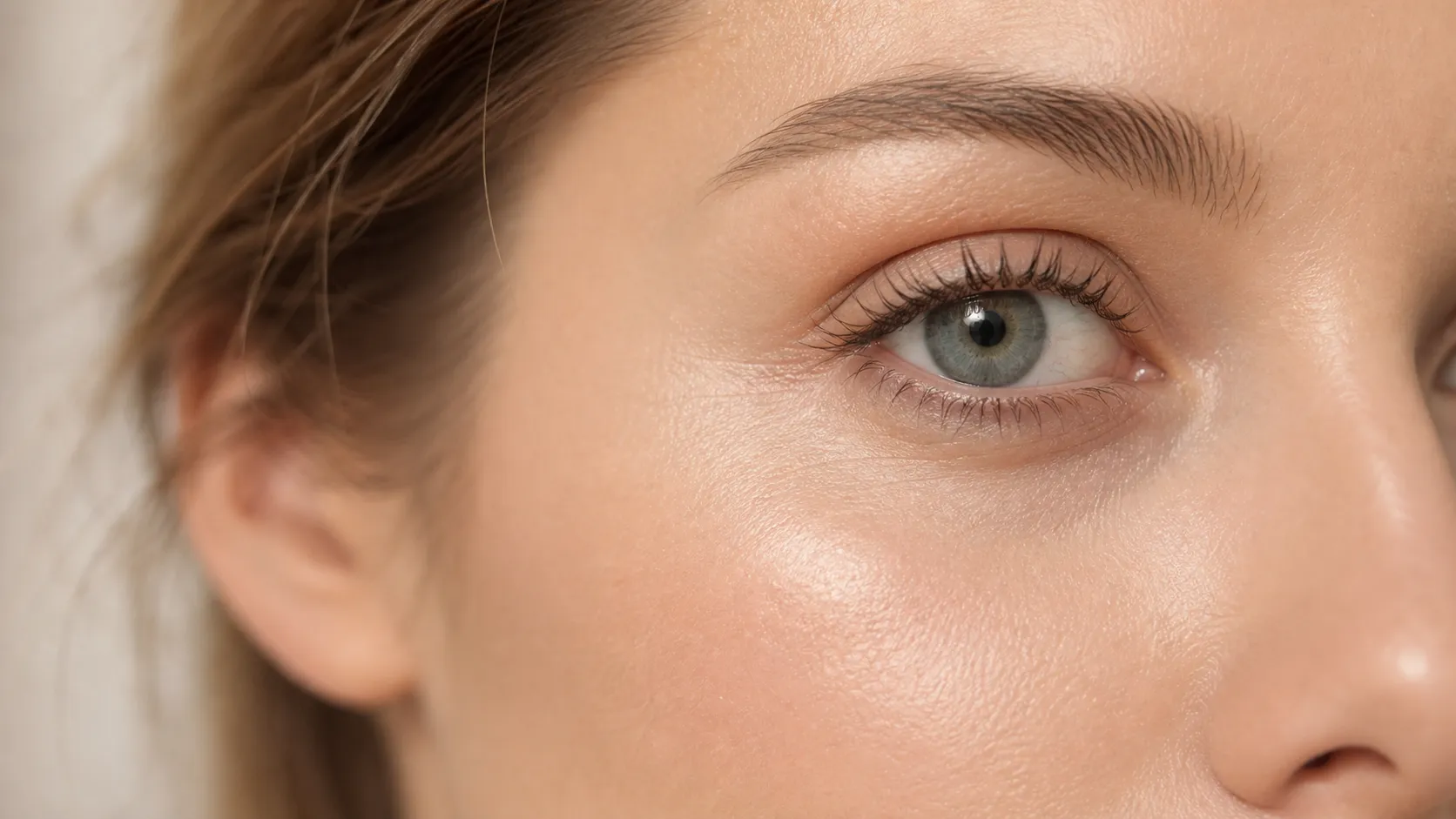
Under-eye filler is the injection of a filling substance, most often HA (hyaluronic acid), into the tear-trough area to help reduce the shadow caused by a deep groove and make the under-eye area look smoother. It is mainly suited to structural-type dark circles. Results typically last around 8-12 months, and outcomes vary by individual.
What Is Under-Eye Filler
Under-eye filler refers to injecting a filling substance into the area beneath the lower orbital rim. The filler most commonly used in aesthetics, and the one best supported by medical data, is the HA, or hyaluronic acid, group, a substance with a structure similar to one the body already has naturally in the skin.
HA holds water and gives a soft texture, so it is formulated into gels of varying thickness for use in different areas of the face. For the very thin skin under the eyes, doctors usually choose a relatively soft filler and inject it at a suitably deep layer, so the result looks natural and there is less chance of visible lumps or abnormal color.
One important advantage of HA filler is that it is “adjustable,” because it can be dissolved with the enzyme hyaluronidase. If an undesirable result occurs or the outcome is not as wanted, the doctor can consider injecting the enzyme to help dissolve some or all of the filler. That said, different fillers respond to the enzyme unequally; some are harder to dissolve and require a larger amount of enzyme, so any correction should be under a doctor’s care.
The effect of under-eye filler is temporary and gradually dissolves over time. It is also not suitable for everyone. Assessing the cause of the under-eye problem before deciding is therefore very important, which is explained in the next section.
What Under-Eye Filler Helps With
Under-eye filler helps quite clearly when the problem comes from the “tear trough,” the deep groove between the lower eyelid and the cheekbone. When the groove is very deep, light falls across it and creates a shadow, making it look like dark circles even though it is really a matter of structure and shadow rather than pigment. Filling the groove so it is shallower therefore helps reduce the shadow and makes the under-eye area look smoother and fresher.
The main goals of under-eye filler can be summarized as follows:
- Fill the tear trough so it looks shallower and smoother
- Reduce the shadow caused by a deep groove or by sagging of the fat beneath the orbital area, which is classed as structural-type dark circles
- Help the transition between the under-eye area and the cheekbone look more blended
Conversely, if dark circles come from pigment (such as dark brown from melanin or post-inflammatory marks) or from blood vessels clearly visible through thin skin, filler injections may not directly reduce the darkness. In some cases, if injected too shallow, it can also create a grayish-blue tone (the Tyndall effect), because blue light reflects through the layer of filler sitting shallow under thin skin.
For this reason, classifying the type of dark circle before treatment is a step the medical team takes seriously, because it helps determine whether filler suits that case or whether another approach should be used as well. Results vary by individual.
How Many Types of Dark Circles Are There, and Which Type Suits Filler
Medicine often divides dark circles into several types by cause: pigmented, vascular, structural (or shadow) type, and mixed, which has more than one cause combined. Understanding which type you have helps you choose a more targeted approach, with filler mainly suited to the structural type.
A simple way to check at first is to gently stretch the skin under the eye or look at it under different angles of light. If the darkness fades when you stretch the skin or change the direction of light, it tends toward the shadow/structural type. If the darkness is brown and does not change with light, it is usually the pigmented type. The vascular type usually has a blue-purple tone and shows clearly when the skin is thin. However, an accurate assessment should be done by a doctor.
| Type of Dark Circle | Typical Appearance | General Care Approach |
|---|---|---|
| Pigmented | Brown to dark brown, from melanin or post-inflammatory marks | Skin care, sun protection, and pigment-reducing approaches as the doctor advises; filler usually does not help directly |
| Vascular | Blue or purple tone, blood vessels visible through thin skin | Adequate rest and skin health, specific approaches as the doctor assesses; filler may help only to a limited degree |
| Structural/Shadow | Shadow from a deep tear trough or sagging orbital fat | HA filler may help fill the groove to reduce the shadow, depending on the assessment |
| Mixed | More than one cause combined | Often needs several approaches combined, as the doctor plans on an individual basis |
As the table shows, under-eye filler has a clear role mainly with the structural type, while for other types filler may not be the main answer. If you are unsure which type you have, having a doctor examine and assess first helps avoid treatment that does not match the cause.
Is Under-Eye Filler Dangerous? Risks You Should Know
Under-eye filler is a highly detailed procedure, because the under-eye area is one of the thinnest-skinned spots on the face and lies close to important blood vessels and structures around the eye. There are therefore risks that recipients should be aware of and not overlook.
Possible risks and side effects include:
- Common side effects that usually resolve on their own, such as swelling, redness, bruising, or tenderness in the early period after injection
- Persistent swelling under the eye (malar edema), which may last a while in some people
- Visible lumps or unevenness, if the filler spreads unevenly
- A grayish-blue tone (Tyndall effect), when the filler sits too shallow under thin skin
- Vascular occlusion, which is uncommon but a serious condition that can cause tissue ischemia, and in very rare cases there have been reports involving vision
Although a serious event like vascular occlusion is uncommon, the fact that it is possible is the reason to choose an experienced doctor, in an accredited facility, using certified products, with preparation to manage any complications. Importantly, HA filler has the advantage that the enzyme hyaluronidase can be used to help dissolve it when necessary, which adds an option for managing problems if they arise.
Before deciding, you should give the doctor a full account of your health history, medications and supplements used, pregnancy, allergy history, and any history of facial procedures, so the doctor can assess suitability and risk on an individual basis. Results and risks vary by individual.
How Many Months Does Under-Eye Filler Last, and How Many cc
Generally, the effect of HA filler in the under-eye area lasts around 8-12 months, with reports in the medical literature giving an average duration of visible results of around 10-11 months; some people may keep it longer. Part of the reason is that the under-eye area moves less than areas such as the lips, so the filler tends to hold its shape longer. However, this duration is approximate and results vary by individual.
Factors that affect how long filler lasts include:
- The type and thickness of the filler chosen
- Each person’s metabolism; those with a faster metabolism may dissolve filler more quickly
- Lifestyle, such as smoking, heavy sun exposure, and rest
- Age and skin condition
For the amount used, it is usually measured in cc (cubic centimeters). Because the under-eye area is small and delicate, many doctors prefer to start with a small volume per side and gradually assess, since adding too much can look puffy or unnatural. The truly appropriate amount depends on the depth of the groove and each person’s facial structure, so there is no fixed number that applies to everyone.
On price, under-eye filler is usually quoted as a range based on the type and amount of filler used. If you would like to know the price range and get a personalized assessment, ask via LINE @onnyxclinic.
How to Care for Yourself Before and After Under-Eye Filler
Preparation before and care after the injection help the result come out well and reduce the chance of side effects. You should mainly follow the instructions of the doctor who performs the procedure, because details may differ from case to case.
Before the injection, generally recommended guidance includes:
- Tell the doctor your health history, medications, supplements, and allergy history
- Avoid medications or supplements that may increase the chance of bruising, as the doctor advises
- Avoid alcohol in the period before the procedure, as advised
- If there is an infection on the facial skin or around the eyes, report it and postpone the procedure
After the injection, generally recommended guidance includes:
- Apply gentle cold compresses as advised to help reduce swelling in the early period
- Avoid massaging, pressing, or touching the injected area firmly
- Avoid strenuous exercise and high heat, such as saunas, in the early period as advised
- Watch for abnormal symptoms, such as unusually severe pain, skin color change, or vision abnormalities, and contact the doctor immediately
Mild swelling or bruising usually improves gradually within a few days to around one or two weeks, depending on the individual. If there is a follow-up appointment, you should attend it so the doctor can assess and make corrections if necessary.
Why Some People Get Lumps or Swelling After Under-Eye Filler
Lumps or swelling after under-eye filler can arise from several causes, both ordinary and temporary ones and those that should be seen by a doctor. Understanding the causes helps you respond correctly and not become overly alarmed.
Possible causes include:
- Swelling or bruising in the early period after injection, which is usually temporary and improves gradually
- The water-holding property of HA, which may make the under-eye area look fuller at first
- Uneven distribution of the filler, so small lumps can be felt
- Injection in a layer that is too shallow, or too large an amount for an area with thin skin
- Persistent swelling (malar edema) in some people, which may last longer than usual
The key point is that HA filler is adjustable. If a lump, persistent swelling, or a result not as desired occurs, the doctor may consider using the enzyme hyaluronidase to help dissolve some or all of the filler, depending on the doctor’s assessment. You should therefore not massage or try to manage it yourself, because that may move the filler out of position. If you have concerns, you should return to the doctor who performed the procedure for a direct assessment.
Who Is Under-Eye Filler Suited To, and Why Consult a Doctor First
In summary, under-eye filler is an option that may help with tear-trough hollows and structural-type dark circles, but it is not the answer for every kind of dark circle, and it carries risks specific to a delicate area. Assessing the true cause by an experienced doctor is therefore a very important first step.
To learn more, you can read the filler service information to understand the procedure better.
If you are still unsure whether your under-eye concern is suitable for filler, the Onnyx Clinic medical team is glad to advise and provide a personalized assessment. To ask questions and book a consultation, contact us via LINE @onnyxclinic.
References
- American Academy of Dermatology Association — Dermal fillers: Overview and what to know: https://www.aad.org/public/cosmetic/younger-looking/dermal-fillers-shape-face
- Long-Term Effects of Tear Trough Hyaluronic Acid Filler: A Retrospective Study, JCAD: https://jcadonline.com/long-term-effects-of-tear-trough-hyaluronic-acid-filler-a-retrospective-study/
- Hyaluronidase for Dermal Filler Complications, NIH/PMC: https://pmc.ncbi.nlm.nih.gov/articles/PMC10836581/
- Response of 21 Hyaluronic Acid Fillers to Recombinant Human Hyaluronidase, NIH/PMC: https://pmc.ncbi.nlm.nih.gov/articles/PMC10745246/
- Complications after cosmetic periocular filler: prevention and management: https://www.oaepublish.com/articles/2347-9264.2020.133
Frequently asked questions
Can under-eye filler fix every type of dark circle? +
No. Under-eye filler is mainly suited to dark circles caused by a deep groove or structure (shadow from the tear trough). Darkness from pigment or visible blood vessels often needs other approaches as well. A doctor should assess first.
How many months does under-eye filler last? +
Generally, HA filler under the eyes lasts around 8-12 months; some people may keep results longer, depending on the type of filler, metabolism, and lifestyle. Results vary by individual.
Is under-eye filler dangerous? +
Injecting under the eyes carries risk because it is a delicate area with important blood vessels. A serious risk such as vascular occlusion is uncommon but possible, so it should be done by an experienced doctor in an accredited facility.
If I am unhappy with the result or get a lump, can it be corrected? +
A key advantage of HA filler is that it can be dissolved with the enzyme hyaluronidase when necessary, for example if there is a lump or the result is not as desired. The doctor will assess and carry this out.
How many cc does under-eye filler take, and roughly what is the price? +
The amount used depends on each person's groove. It often starts with a small volume per side. Prices are quoted as a range based on the type and amount of filler. For details and a personalized assessment, ask via LINE @onnyxclinic.

Written by Onnyx Clinic Editorial Team
Medically reviewed by Dr. Janthida Gluayjumnong · Attending Physician, Onnyx Clinic · ว.74005
Last reviewed June 28, 2026
Doctor →Related articles

Injectables
How to Tell If Filler Is Genuine and Check Thai FDA Registration
How to tell if dermal filler is genuine: check the Thai label, registration number, lot number and box seal before injection, plus the Thai FDA's three checks.
Injectables
Filler Lumps: Causes, Risks, and How to Fix Them
What causes filler lumps, how to tell early swelling from a true lump, urgent warning signs, and how each type is managed — by the Onnyx Clinic medical team.

Injectables
Botox Not Working: Is Botox Resistance Real?
Why Botox sometimes does not work, what Botox resistance really is and how common, how doctors test for it, how to prevent it, and what to do next
Ready to take care of yourself?
Consult a doctor and book any day via LINE.
Chat on LINE · @onnyxclinic