Weight Loss Pens: What They Are and How to Choose
What weight loss pens are, how GLP-1 works, which brands exist in Thailand, how much they reduce, side effects and price — by Onnyx Clinic

A weight loss pen is a subcutaneous injection in the GLP-1 class that mimics a gut hormone, making you feel full sooner, stay full longer, and eat less without fighting hunger. In Thailand these are specially controlled medications requiring a doctor’s prescription — they are neither supplements nor fat burners.
What is a weight loss pen and how does it work?
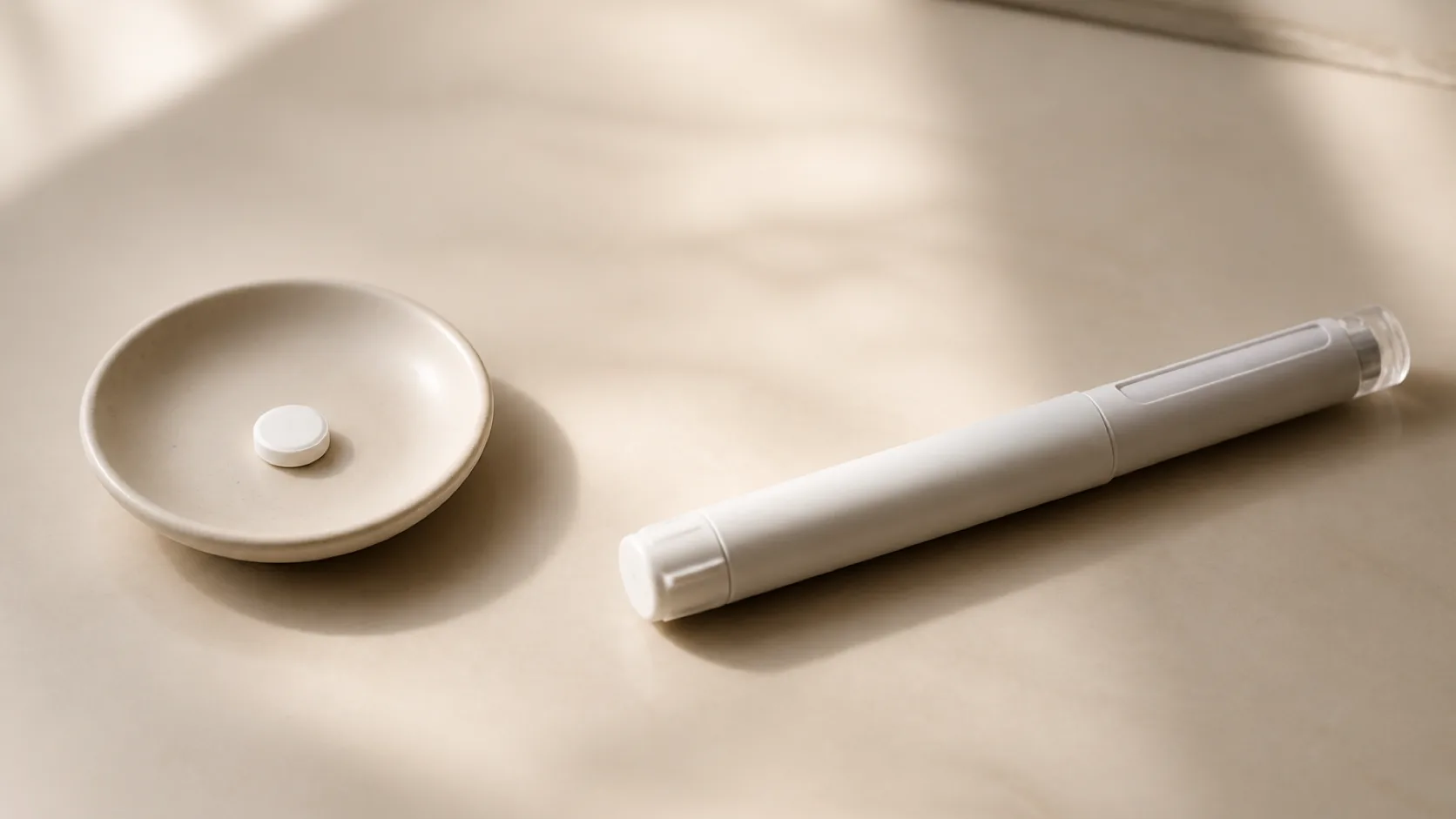
A weight loss pen is a prefilled injection device containing a GLP-1 receptor agonist — a medication designed to mimic GLP-1, the hormone your small intestine releases after eating. That hormone does three things directly relevant to body weight: it prompts insulin release when blood sugar is high, it slows gastric emptying so food stays in the stomach longer, and it signals fullness to the part of the brain that governs appetite.
The combined effect is that people taking it typically feel full sooner and stay full longer. Portion sizes fall on their own, without the same effort of resisting hunger. This is why the class is often called an appetite-control pen, which describes the mechanism more accurately than “weight loss pen” does.
One point deserves emphasis: these drugs do not burn fat directly, and they do not replace behaviour change. The weight lost comes mainly from reduced energy intake. Eating enough protein and training to preserve muscle mass therefore remain necessary — otherwise some of the weight lost will come from muscle.
Tirzepatide, the active ingredient in Mounjaro, differs slightly in that it acts on two receptors — both GIP and GLP-1 — whereas semaglutide and liraglutide act on the GLP-1 receptor alone.
Which weight loss pens are available in Thailand?
Four names come up most often, and the meaningful differences are not the brands but the active ingredient, the injection frequency and the registered indication.
| Brand name | Active ingredient | Mechanism | Injection frequency |
|---|---|---|---|
| Mounjaro | tirzepatide | GIP + GLP-1 | Once weekly |
| Wegovy | semaglutide | GLP-1 | Once weekly |
| Ozempic | semaglutide | GLP-1 | Once weekly |
| Saxenda | liraglutide | GLP-1 | Once daily |
The registered indications differ. Some are registered for weight management, others primarily for type 2 diabetes. Choosing between them is therefore not a question of which is strongest, but which matches your health status and the registered indication — a decision for your doctor.
On legal status in Thailand: Mounjaro is registered with the Thai Food and Drug Administration under registration number 1C 18/67(NC) and is classified as a specially controlled drug, meaning it must be prescribed by a doctor and dispensed only through a licensed clinic or pharmacy.
How much weight do these medications actually reduce?
The reliable figures come from large clinical trials, not from reviews or anecdotes. In SURMOUNT-1, published in the New England Journal of Medicine, participants with obesity or overweight and without diabetes received tirzepatide once weekly for 72 weeks. Average weight loss was roughly 16.0-22.5% depending on the dose studied, compared with 2.4% in the placebo group.
A more useful figure than the average is the proportion who responded. In the same trial, roughly 89-96% of participants on tirzepatide lost at least 5% of body weight, against 28% on placebo. That 5% threshold is clinically meaningful, because it is the point at which blood pressure, blood sugar and blood lipids begin to improve.
These figures were achieved under trial conditions that included supervised changes to diet and exercise throughout. Real-world results differ between individuals according to genetics, behaviour, existing conditions and consistency of use. There is no guarantee of any particular weight figure, and durable weight loss still rests on behaviour change.
Who is suitable, and who should avoid them?
Doctors generally consider this class for people whose body mass index falls in the obese range, or who are overweight with weight-related complications such as type 2 diabetes, high blood pressure, abnormal blood lipids or sleep apnoea — typically after behaviour change alone has not reached the target.
Groups needing particular caution, or who should not use these medications, include:
- People who are pregnant, planning pregnancy, or breastfeeding
- People with a personal or family history of medullary thyroid carcinoma, or multiple endocrine neoplasia type 2 (MEN2)
- People with a history of pancreatitis
- People with significant gastrointestinal disease, such as pre-existing delayed gastric emptying
- People with an eating disorder
- People with poorly controlled liver or kidney disease
This list illustrates why assessment before starting genuinely matters; it is not a complete checklist for self-diagnosis. History taking, examination and any blood tests your doctor considers appropriate are what make treatment safer.
What are the common side effects?
The main side effects are gastrointestinal, following directly from the slowed gastric emptying. In SURMOUNT-1 the commonly reported events were nausea at roughly 24.6-33.3%, diarrhoea at roughly 18.7-23.0%, and vomiting at roughly 8.3-12.2%, depending on dose.
More informative than frequency is severity and discontinuation. These events were mostly mild to moderate, occurred early in treatment or when the dose was stepped up, and generally eased as the body adjusted. Across the SURMOUNT trials, roughly 4-10.5% of participants discontinued because of adverse events, against 2.1-4% on placebo.
This is why doctors start low and increase gradually rather than beginning at a high dose. Slow titration lets the body adapt and reduces the chance of symptoms severe enough to force stopping. Symptoms that warrant prompt medical attention include severe persistent abdominal pain, particularly pain radiating to the back, vomiting to the point of dehydration, or signs of an allergic reaction.
How much does it cost at Onnyx Clinic?
At Onnyx Clinic, Mounjaro pens start at 2,499 THB, with the total depending on the dose and the care plan your doctor determines individually. The clinic stocks pens as prescribed: 2.5 mg, the starting dose that lets the body adjust gradually, and 5 mg, the step-up dose based on response.
Market prices for weight loss pens vary widely by medication and dose. If you find a price that is unusually low through an online channel, treat counterfeit product and improper cold-chain storage as real risks in Thailand.
How to start safely
A few steps should happen before the first injection, and none of them can be skipped.
- See a doctor for assessment — history of existing conditions, current medications, family history, and body mass index
- Additional tests as your doctor considers appropriate, such as blood sugar and liver and kidney function
- Start at a low dose, with a follow-up appointment to review response and side effects before any increase
- Plan diet and exercise alongside, with enough protein to preserve muscle mass
- Store the medication correctly, per the label and your doctor’s or pharmacist’s instructions
If you are considering starting a weight loss pen, consult a doctor at Onnyx Clinic to assess whether it suits your health and to plan care that can actually be followed up. Ask via LINE: @onnyxclinic
References
- Tirzepatide Once Weekly for the Treatment of Obesity — SURMOUNT-1 (NEJM)
- Lilly: SURMOUNT-1 results published in NEJM
- Weight regain and cardiometabolic effects after withdrawal of semaglutide: The STEP 1 trial extension (PubMed)
- Gastrointestinal tolerability of tirzepatide in the SURMOUNT-1 to -4 trials (Diabetes, Obesity and Metabolism)
- Thai Food and Drug Administration — drug product database
Frequently asked questions
Are weight loss pens and appetite-control pens the same thing? +
They are colloquial names for the same class of medication: GLP-1 injections that make you feel full sooner and stay full longer. The appetite-control description comes from the way the drug slows gastric emptying and signals fullness to the brain. That said, each medication in this class has a different active ingredient and a different registered indication, so a doctor should choose the one that suits your health.
Can I buy a weight loss pen online myself? +
You should not. Under Thai law these are specially controlled medications that must be prescribed by a doctor and dispensed through a licensed clinic or pharmacy. Buying from unverified online sources carries real risks: counterfeit product, storage at the wrong temperature, and doses that do not suit your health.
How often do I need to inject? +
The medications most widely used now, such as tirzepatide and semaglutide, are injected once weekly. Liraglutide (Saxenda) is injected daily. Doctors typically start at a low dose and step it up gradually based on your response and how well you tolerate side effects — not by starting high.
Will the weight come back if I stop? +
It can. The STEP 1 trial extension found that one year after stopping semaglutide, participants had regained roughly two-thirds of the weight they had lost. This is best understood as long-term care alongside changes to eating and exercise, rather than a short course with an endpoint.
Is a weight loss pen suitable for everyone? +
No. A doctor assesses body mass index, existing conditions, current medications and family history. People who are pregnant or breastfeeding, those with a history of medullary thyroid cancer or MEN2 syndrome, and those with a history of pancreatitis need particular caution or should not use it.
How much does a weight loss pen cost at Onnyx Clinic? +
Mounjaro pens start at 2,499 THB, with the total depending on the dose and the care plan your doctor determines individually. The clinic stocks 2.5 mg and 5 mg pens as prescribed. Ask for details via LINE: @onnyxclinic

Written by Onnyx Clinic Editorial Team
Medically reviewed by Dr. Janthida Gluayjumnong · Attending Physician, Onnyx Clinic · ว.74005
Last reviewed August 2, 2026
Doctor →Related articles
Body & Weight
Oral GLP-1 vs Injection Pens: What's the Difference, Which to Choose
Oral GLP-1 pills vs injection pens — frequency, use conditions and Thai FDA status in 2026, which is actually available today, and how doctors choose.
Body & Weight
Orforglipron vs Mounjaro: How They Differ, When the Pill Reaches Thailand
Orforglipron (oral GLP-1) vs the Mounjaro pen: mechanism, frequency, trial data, side effects and Thai status in 2026 — wait for the pill or see a doctor first?

Body & Weight
What Are CagriSema and Retatrutide? How They Differ from Mounjaro
CagriSema and retatrutide are next-generation GLP-1 drugs still in research, not sold in Thailand. Mechanisms, trial findings, approval status as of Aug 2026.
Ready to take care of yourself?
Consult a doctor and book any day via LINE.
Chat on LINE · @onnyxclinic